
Lumistep Cane · Tech specs
The Lumistep Smart Cane, in detail.
Design targets for the first production cane: every part of the smart handle, the numbers behind it, what comes in the box and what it will not do. Final figures come from samples and field trials with blind participants from February 2027.
Concept image. The Lumistep Smart Cane is in engineering development.
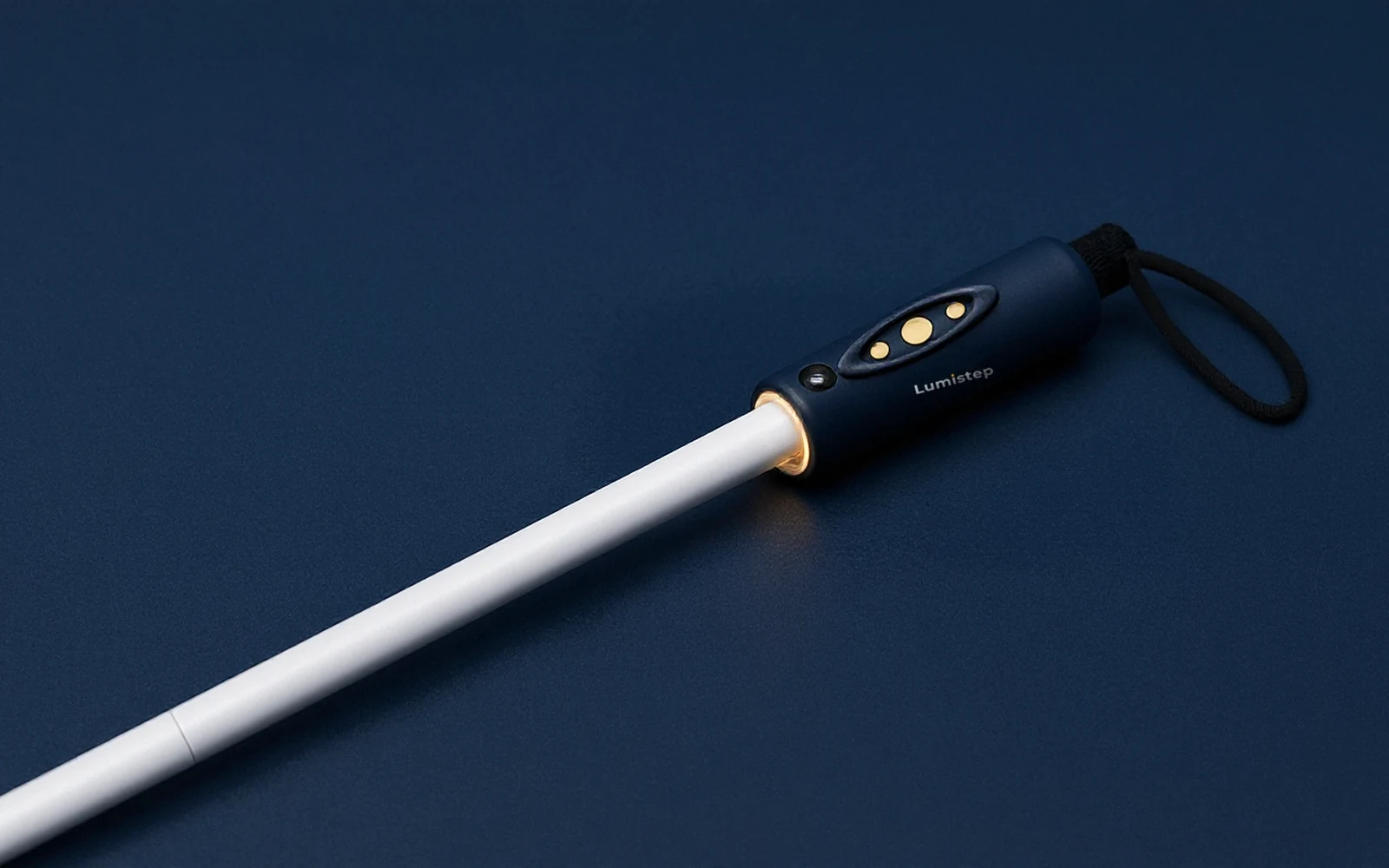
Inside the smart handle
Ten parts, one slim handle.
White folding shaft
All white with reflective film, four sections, about 33 cm folded. No wires inside; it clicks off the handle, so a bent shaft is simple to replace.
Lumi ring
A warm amber ring where the handle meets the shaft: a steady status light that helps people notice you after dark.
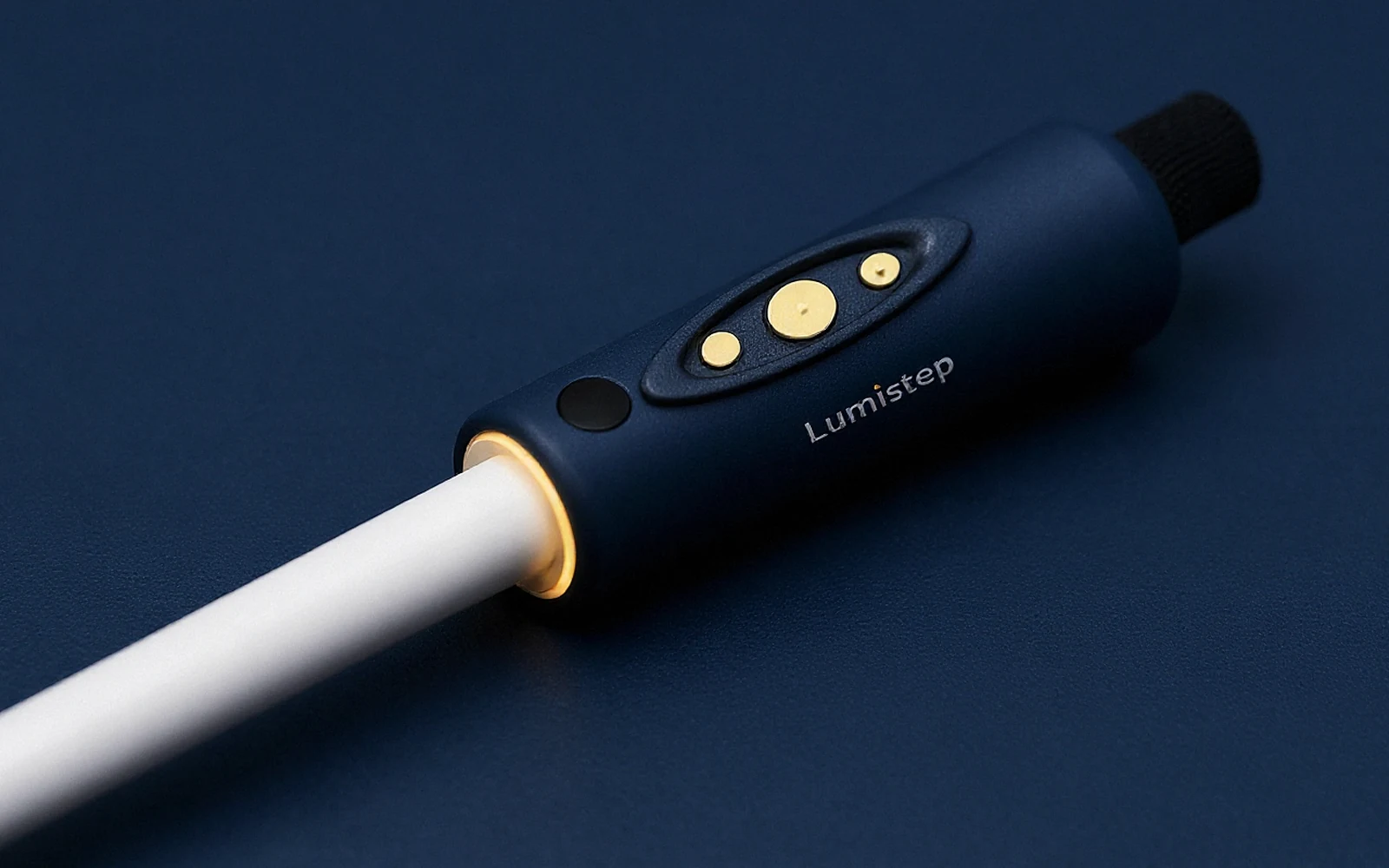
Sensor lens with 60 GHz radar
A small round sealed lens on the front of the handle. Behind it, the radar looks forward and up to head height, up to about 3 m; the chip is rated to work in rain, dust and sun.
Thumb pad: Talk, Call and SOS
A recessed oval pad with a raised 1.5 mm rim, under your thumb. Inside, three flush matte-gold buttons that need a firm press: Talk (centre, largest, one dot), Call (rear, two dots) and SOS (front, ridged).
Laser window (inside)
A small window underneath. The down-facing laser measures the ground ahead to catch kerbs, steps and open drains.
Main board (inside)
A Bluetooth chip running Lumi OS, plus a 6-axis motion sensor that follows your swing and decides each alert.
Battery (inside)
An AA-size 800 mAh lithium-ion cell with protection; about 3–6 weeks of walking (target).
Left and right haptic motors (inside)
A buzz on the side that matters, telling you side, distance, head height and drops.
Speaker grille (inside)
A small speaker for short spoken status and prompts.
USB-C port (inside)
Charges with a standard USB-C cable. Sealed for IP65 (target).
Tech specs
Lumistep Smart Cane specifications.
Size and weight
- Length
- 110–140 cm, in sizes
- Folded
- About 33 cm, four sections on an elastic cord
- Weight
- 340–420 g in aluminium; about 280 g in graphite (target)
- Finish
- Slim straight matte navy handle, front sensor lens, amber Lumi ring, all-white reflective shaft
Sensing
- Forward sensor
- 60 GHz radar behind the sensor lens, Acconeer A121 class[17]
- Ground sensor
- Down-facing laser (time of flight) behind the laser window, ST VL53L1X class[18]
- Motion sensor
- 6-axis, follows your swing and steps
- Sensing range
- Up to about 3 m ahead in Open mode; ground about 0.8–1.3 m ahead (design targets)
- Modes
- Crowd, Street (default) and Open
Feedback and controls
- Haptics
- Two motors, left and right, inside the handle
- Controls
- Recessed oval thumb pad with a raised guard rim; three flush matte-gold buttons: Talk (centre, largest, one dot), Call (rear, two dots), SOS (front, ridged)
- Press and gestures
- Firm press of about 4 N with a clear click. Hold Talk about 0.5 s; double-press Call; hold SOS 3 s with a buzz countdown, release to cancel
- Swing lock
- Quick taps are ignored while the cane is swinging; every action is confirmed by a buzz and voice
- Speaker
- Small speaker behind a fine grille, for spoken status
- Status light
- Amber Lumi ring, steady, never flashing
Power and toughness
- Battery
- 14500 (AA-size) lithium-ion, 800 mAh
- Battery life
- About 3–6 weeks of daily walking (target)
- Charging
- USB-C
- Water and dust
- IP65 (target)
Connection and software
- Offline
- Sensing and haptics work fully offline, with no phone
- Connection
- Bluetooth Low Energy to the Lumistep app (optional)
- Software
- Lumi OS, updated over the air
Price
- Planned price
- Cane only: $99 · £79. South Asia: Tk 5,900 · ₹3,999
In the box
What’s in the box.
Lumistep Smart Cane
Your size, with a roller tip fitted and wrist strap attached.
USB-C charging cable
A standard cable, so any USB charger works.
Spare tip
A second roller tip, because tips wear out first.
Tactile quick-start card
A short braille line and a code that plays spoken set-up steps.
Planned contents; they may change before launch.
Compatibility
Works on its own. Better together.
On its own
Sensing, haptics and the Lumi ring work with no phone, no app and no signal.
Phones
Pairs with the Lumistep app on Android 10 or newer at launch. An iPhone version is planned.
Glasses or Buds
Talk wakes Lumi on either. Find and Walk with Lumi use the cane’s left or right buzz to point the way.
Your cane skills
Designed around the cane techniques taught in orientation and mobility training, not instead of them.
Tips and shafts
The roller tip is replaceable, and the shaft clicks off the handle, so worn parts are simple to swap.
Updates
Lumi OS updates arrive over the air from the app. Without the app, the cane keeps working as it is.
Compare
Which Lumistep is for you?
- What it does
- Feels the path ahead and buzzes in your hand
- How it senses
- 60 GHz radar behind the front sensor lens, downward laser, motion sensor
- How it tells you
- Left and right haptic motors in the smart handle
- Battery
- About 3–6 weeks of daily walking (target)
- Weight
- 340–420 g aluminium; about 280 g graphite (target)
- Works without a phone
- Yes
- Planned price
- $99 · £79 on its own
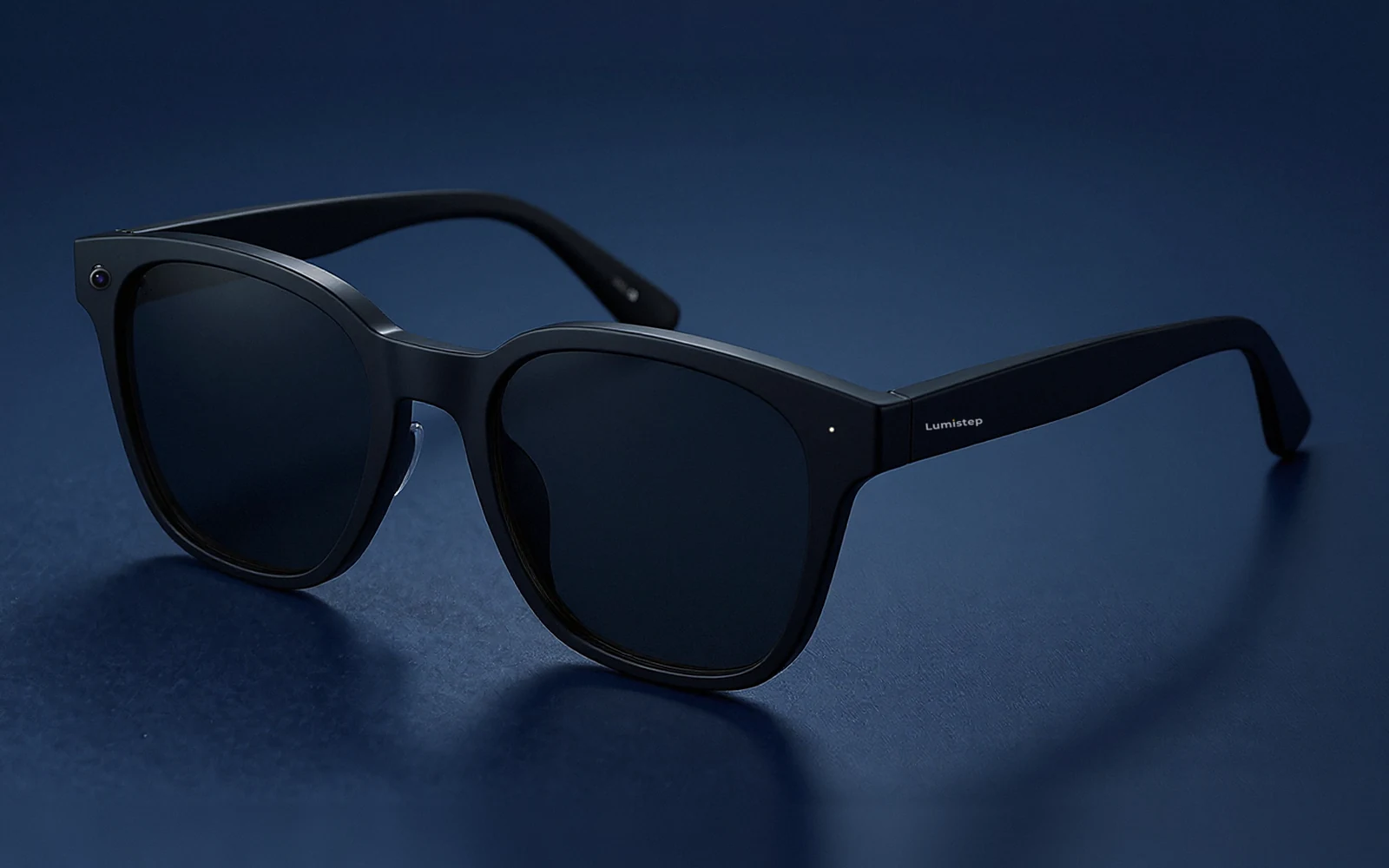
- What it does
- Notices what changes and tells you in a few words
- How it senses
- Lumi Vision sensor at eye level
- How it tells you
- Hidden open-ear speakers in the temples
- Battery
- A full day (target)
- Weight
- 38–42 g (target)
- Works without a phone
- Pairs with the app by Bluetooth
- Planned price
- In the $199 · £149 kit
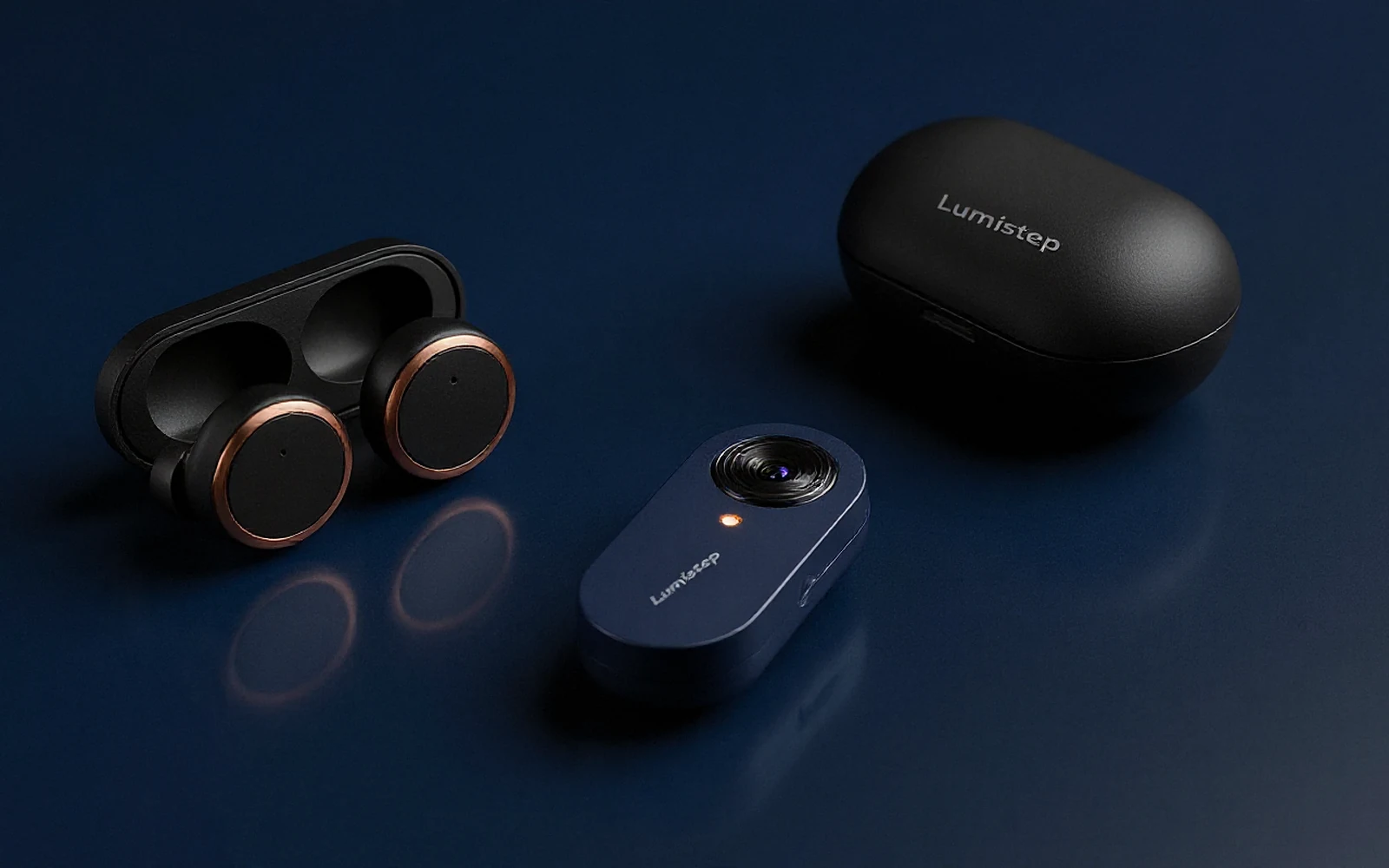
- What it does
- Guidance and calls in one ear; Lumi Vision on a clip
- How it senses
- Lumi Vision clip at chest level
- How it tells you
- Vented buds; one-ear walking mode
- Battery
- 4–6 h, plus 3–4 top-ups from the case (target)
- Weight
- About 4 g per bud (target)
- Works without a phone
- Pairs with the app by Bluetooth
- Planned price
- In the $199 · £149 kit
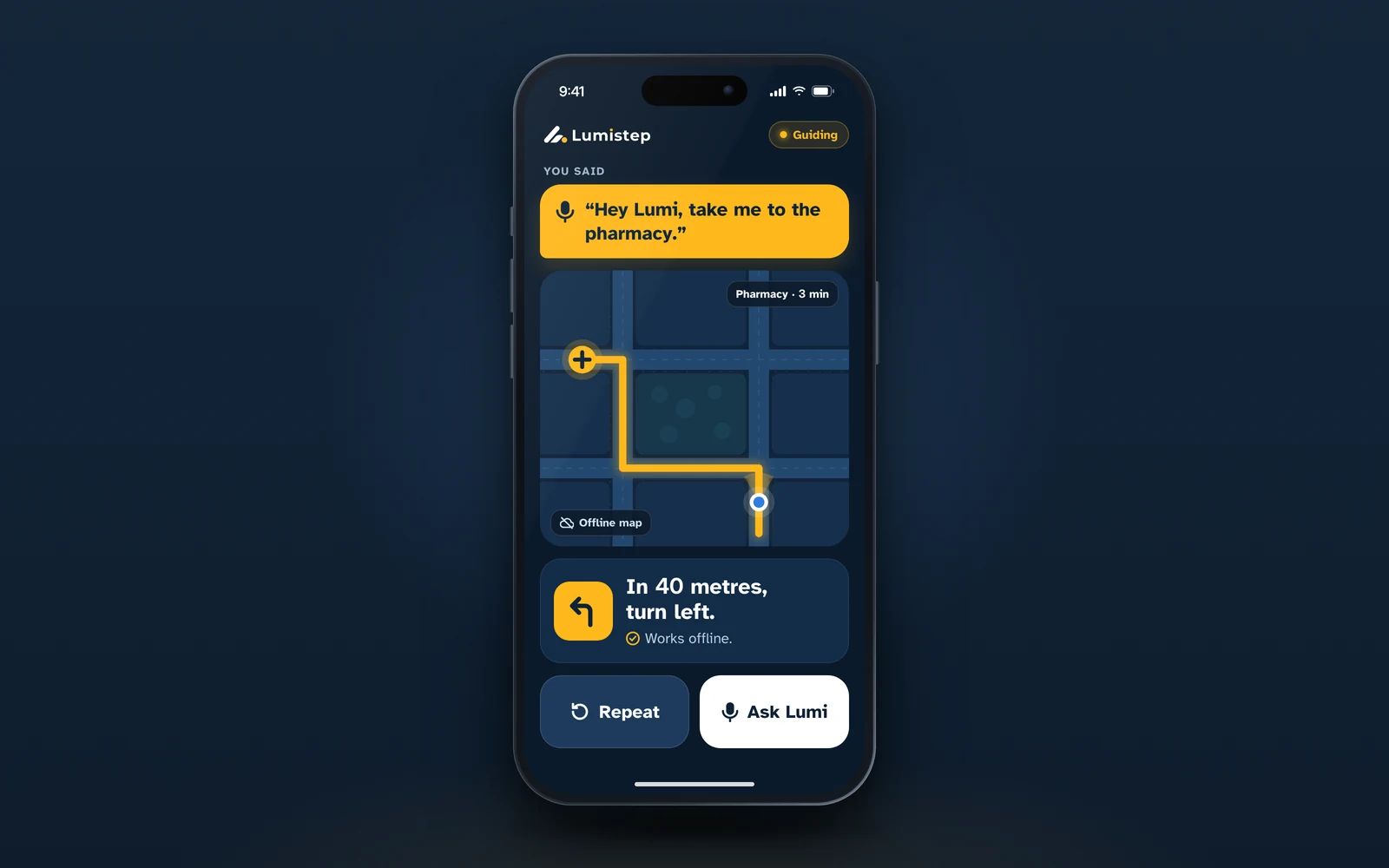
- What it does
- Routes, reading, money check, calls and SOS
- How it senses
- The phone’s GPS and camera, plus your devices
- How it tells you
- Voice, and cane taps for turns
- Battery
- Runs on your phone
- Weight
- Under 100 MB to start (target)
- Works without a phone
- It is the phone
- Planned price
- Free forever; plans from $4.99 · £3.99 a month
| | | | |
|---|---|---|---|---|
| What it does | Feels the path ahead and buzzes in your hand | Notices what changes and tells you in a few words | Guidance and calls in one ear; Lumi Vision on a clip | Routes, reading, money check, calls and SOS |
| How it senses | 60 GHz radar behind the front sensor lens, downward laser, motion sensor | Lumi Vision sensor at eye level | Lumi Vision clip at chest level | The phone’s GPS and camera, plus your devices |
| How it tells you | Left and right haptic motors in the smart handle | Hidden open-ear speakers in the temples | Vented buds; one-ear walking mode | Voice, and cane taps for turns |
| Battery | About 3–6 weeks of daily walking (target) | A full day (target) | 4–6 h, plus 3–4 top-ups from the case (target) | Runs on your phone |
| Weight | 340–420 g aluminium; about 280 g graphite (target) | 38–42 g (target) | About 4 g per bud (target) | Under 100 MB to start (target) |
| Works without a phone | Yes | Pairs with the app by Bluetooth | Pairs with the app by Bluetooth | It is the phone |
| Planned price | $99 · £79 on its own | In the $199 · £149 kit | In the $199 · £149 kit | Free forever; plans from $4.99 · £3.99 a month |
| You are here | See Lumistep Glasses | See Lumistep Buds | See Lumistep App |
Honest limits
What it will not do.
- It senses the area in front of you, not behind you or beside your hips.
- Thin wires, chains and very narrow poles may be missed by any sensor of this kind.
- The ground laser reaches less far in strong sun and can be fooled by a wet or muddy window. Your cane tip stays your main drop detector.
- It is not a traffic or road-crossing aid, and it will never say it is safe to cross.
- It does not replace orientation and mobility training.
- Ranges and battery life are targets. We have no test results of our own yet; field trials with blind participants set the final numbers.
Questions
Questions people ask us.
Do I need a phone to use the cane?
No. The smart handle senses and buzzes on its own, fully offline, with no phone and no internet. The phone app adds walking directions, reading, calls and SOS when you want them.
Will it tell me when it is safe to cross the road?
No, and it never will. Crossing is your decision, made with your cane skills, your hearing and, if you have one, your guide dog. The cane warns about things in your path; it does not judge traffic.
What happens if the battery runs out?
You still have a full, normal white cane. The sensors are extras; the shaft, handle and tip work exactly like the cane you already know. It tells you with a buzz when the battery is low as you unfold it.
Could I press SOS by accident?
We designed against it. The grip has no controls, the three buttons sit flush inside a pad with a raised rim, each needs a firm press of about 4 N, quick taps are ignored while the cane is swinging, and SOS needs a 3-second hold with a rising buzz. Let go to cancel.
Does it replace cane training?
No. It is a white cane first. Orientation and mobility training stays essential. We’re designing the field trials around trainers, so the vibration language fits how people are already taught.
Why is the shaft all white, with no red bands?
In the UK, red bands on a cane tell people the user is deafblind[33]. Our standard cane stays all white so it sends the right signal. A deafblind edition with the recognised red bands is on our roadmap.
How will I know which side something is on?
The haptic motor on that side of the handle buzzes. If something is straight ahead, both buzz together. The motion sensor follows your swing, so the cane knows where it was pointing when it sensed the object.
How is it different from other smart canes?
The best-known smart cane, WeWALK, costs about $850[19] and uses one upward ultrasonic sensor. The Lumistep Smart Cane pairs a 60 GHz radar that works in rain and dust with a downward laser for drops, buzzes left or right, works fully offline, and is planned at $99 for the cane alone.
When can I buy one, and for how much?
Nothing is for sale yet. The planned price is $99 · £79 for the cane alone, with lower local prices in South Asia. Field trials with blind participants begin in February 2027, and first production kits are planned for late 2027: South Asia first, then the UK, the US and beyond. Join the waitlist to hear first.
Keep reading
Where next?
- How it worksTalk, touch, hearHow the cane, glasses or buds and the app work together, with no screen needed.
Lumistep
Get involved
Three ways to help blind and low-vision people walk, read and travel on their own.
For people and families
Join the waitlist
Hear first about field trials and the first production kits, and help shape what we build.
Join the waitlistFor charities, trainers and sponsors
Support Lumistep
Sponsor a kit, host a field trial or partner with us to reach the people who need it most.
Ways to supportFor investors
Invest in Lumistep
We are raising our first round to complete engineering and field trials. Let's talk.
For investors