
In engineering development · no test results yet
Technology
A smart cane that feels the path ahead.
Lumistep is built from proven parts: a radar chip, an eye-safe laser, a motion sensor, two small vibration motors and a new kind of camera sensor that processes only what changes. Every number on these pages is a rating from a part's maker or a result from someone else's research. Field trials with blind participants begin in February 2027, and our own results go on these pages as they come in.
- 60 GHz
- : Radar in the smart handle, rated at about 1 mW for ten readings a second.[38]
- 320 × 320
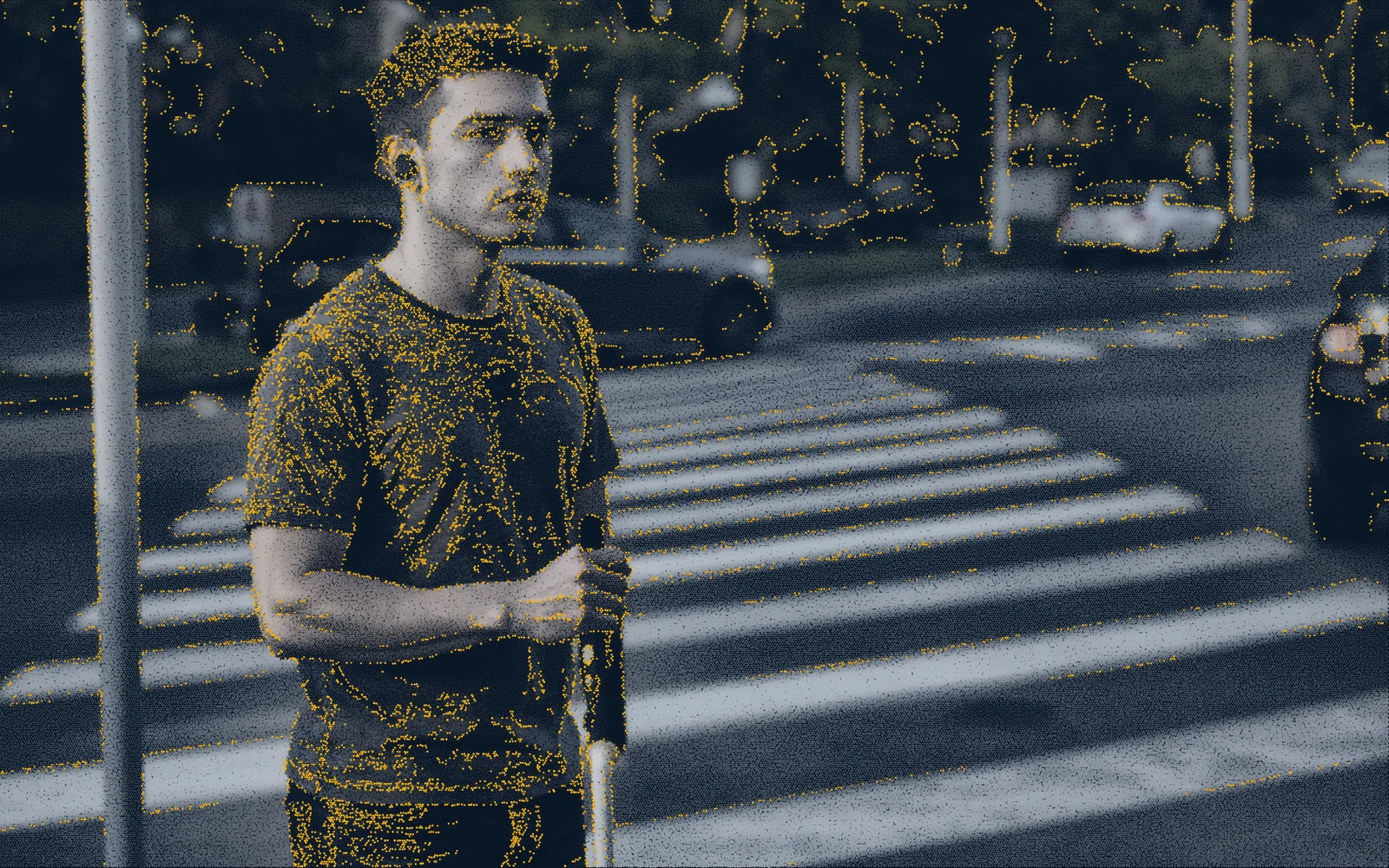
- : Pixels in Lumi Vision's class of event sensor. Each one reports only change.[28]
- ~3 mW
- : Typical power of that event sensor, which wakes only for change.[28]
- 3–6 weeks
- : Cane battery on everyday walking. Our target, not yet measured.
Explore the technology
Five parts of one calm system.
Sensing
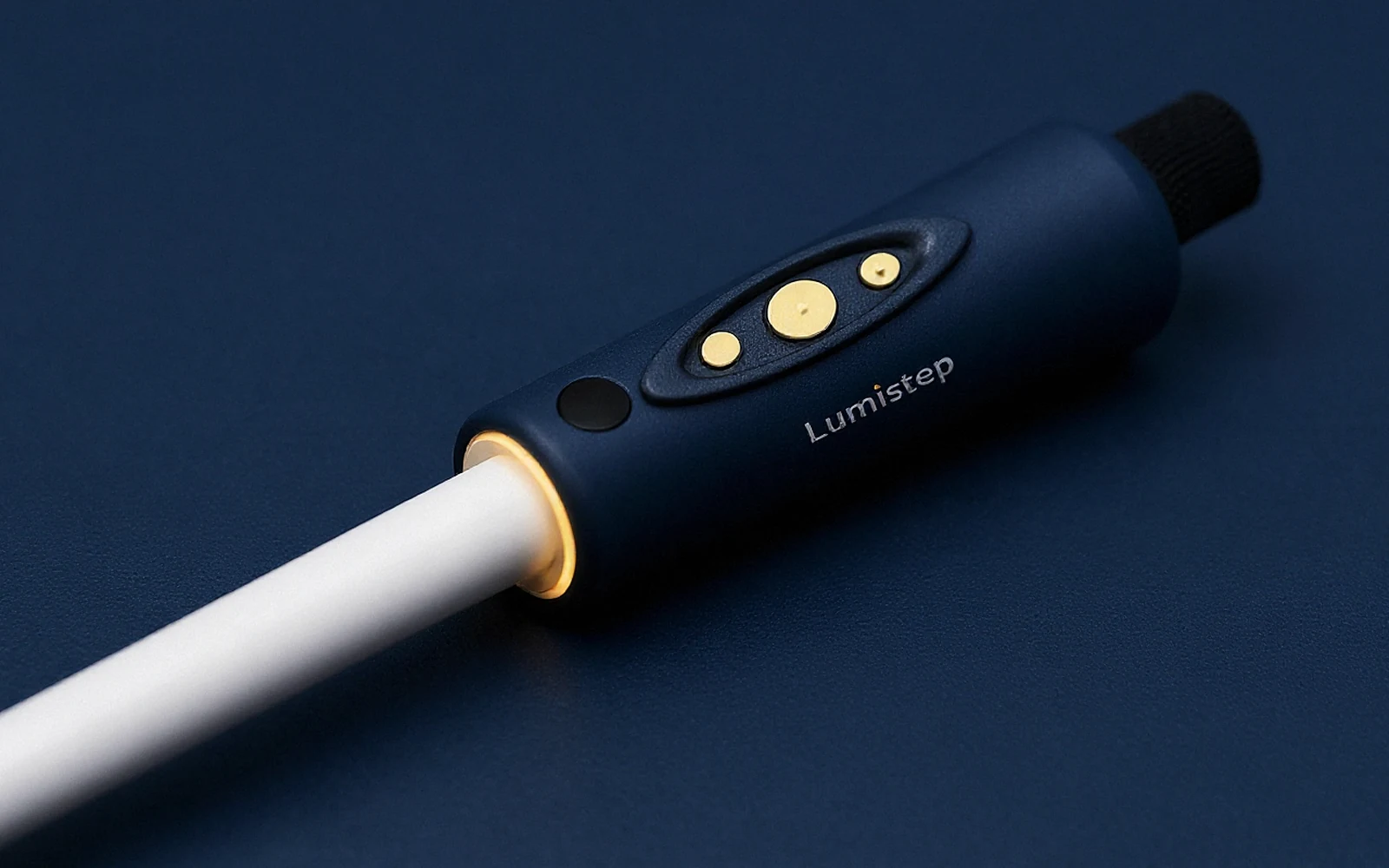
Radar, laser and a vibration language
How the smart handle feels the path ahead, from head height down to the kerb, and tells your hand which side.
Lumi Vision
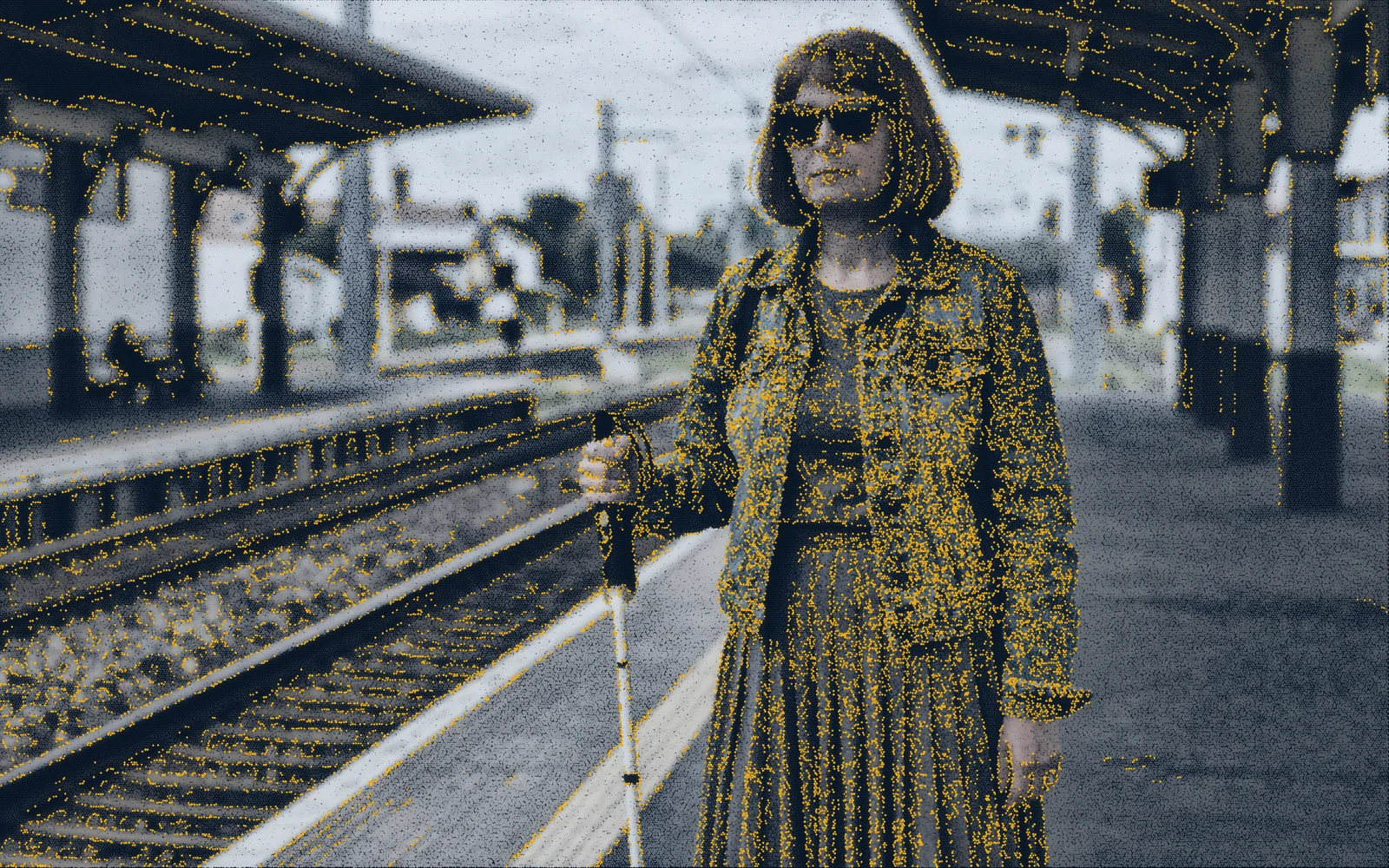
A camera that only processes what changes
The event sensor in the glasses and the buds' clip, what Lumi can read and describe, and where the science is still young.
Lumi OS
Our own software, and your privacy
The firmware inside every device: deliberate controls, quiet alerts, updates over the air and nothing stored by default.
Offline
Maps, on-device AI and battery
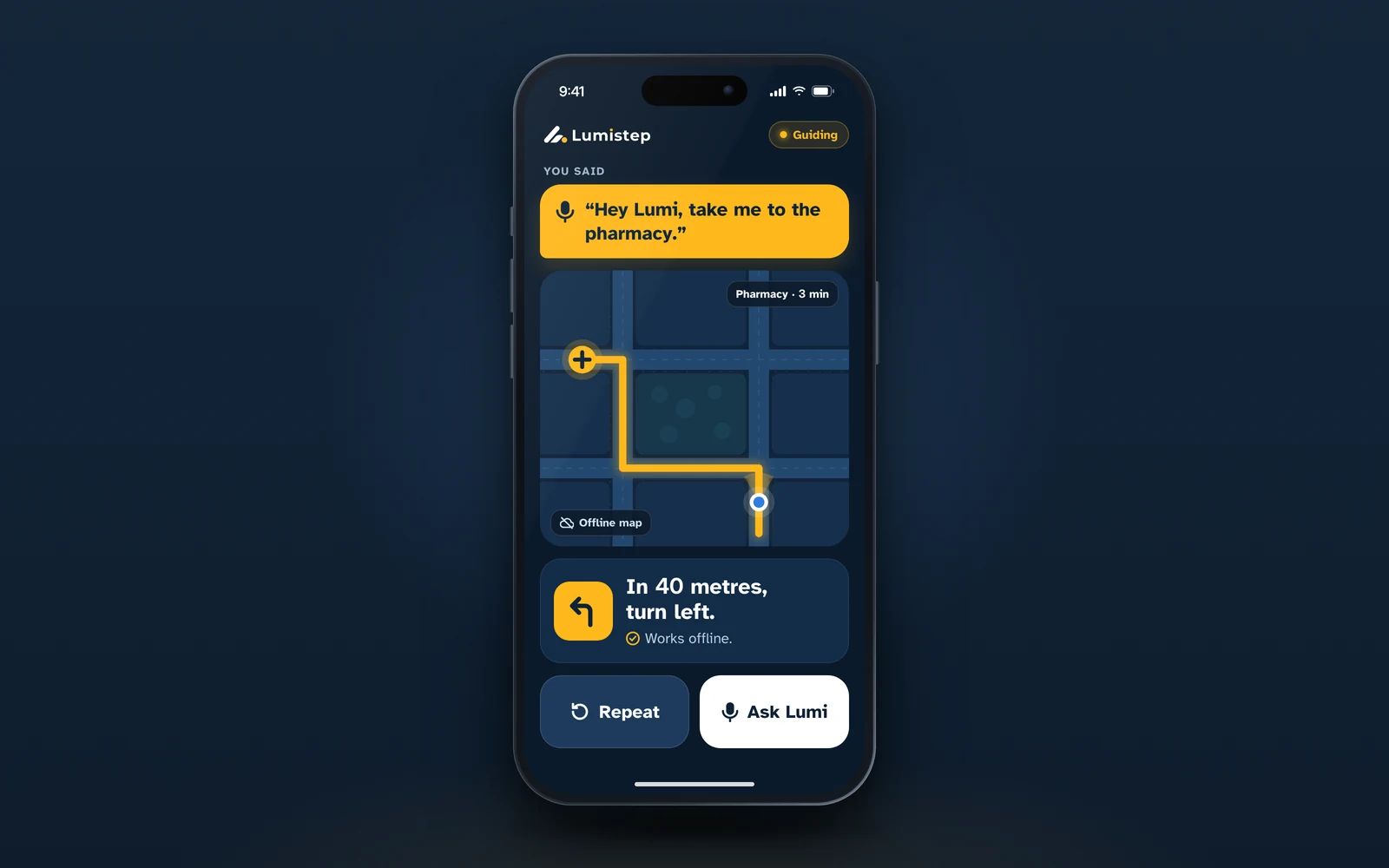
What works with no signal at all, how the phone does the heavy thinking, and how long each device lasts.
Safety
Certification, testing and honest limits
The tests before anything is sold, how we trial with blind people, what the research says and what Lumistep will never claim.
How it connects
Three devices. Each one stands on its own.
Optional internet: richer descriptions, a human helper, family sharing
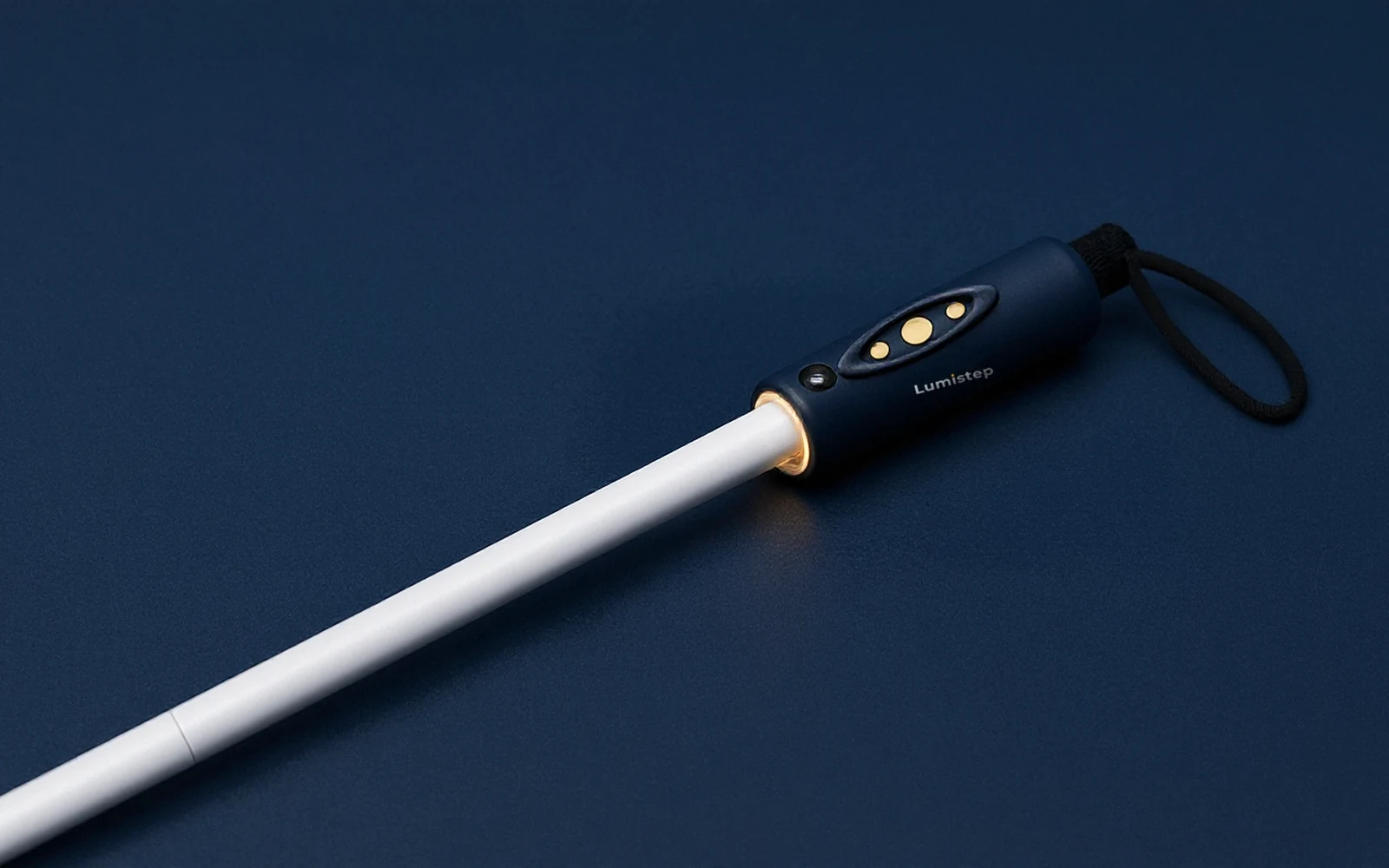
Lumistep Smart Cane
- Radar and a downward laser in the smart handle
- Left and right haptics
- Talk, Call and SOS in a guarded thumb pad
- Works with no phone
Connects to the app by Bluetooth
Lumistep App
- Offline maps and routes
- English and South Asian voice
- Reading, money check and SOS
The hub, on your own phone
Glasses or Buds
- Lumi Vision and speech
- Calls, with Lumi OS inside
Connects to the app by Bluetooth
How we build
Four rules behind every part.
Safety first
The cane never waits for the phone.
Obstacle warnings run inside the cane. If your phone is off or out of range, they still work.
Private by design
Processed on the device.
Lumi Vision runs on the device and only short results go to the phone. Nothing is stored by default. How Lumi OS handles privacy.
Graceful failure
Still useful if one part fails.
Every device keeps working if another one fails or runs flat. A flat cane battery still leaves a normal white cane.
Quiet by default
Silence when the path is clear.
Few, simple alerts. Research shows extra alerts slow people down, so Lumistep speaks only when it matters.
What we build, and what we buy.
We write
All the software.
Lumi OS, the app, the vibration language and Lumi Vision processing, by our founder-led team with the ANB Codes studio.
We design
Every device.
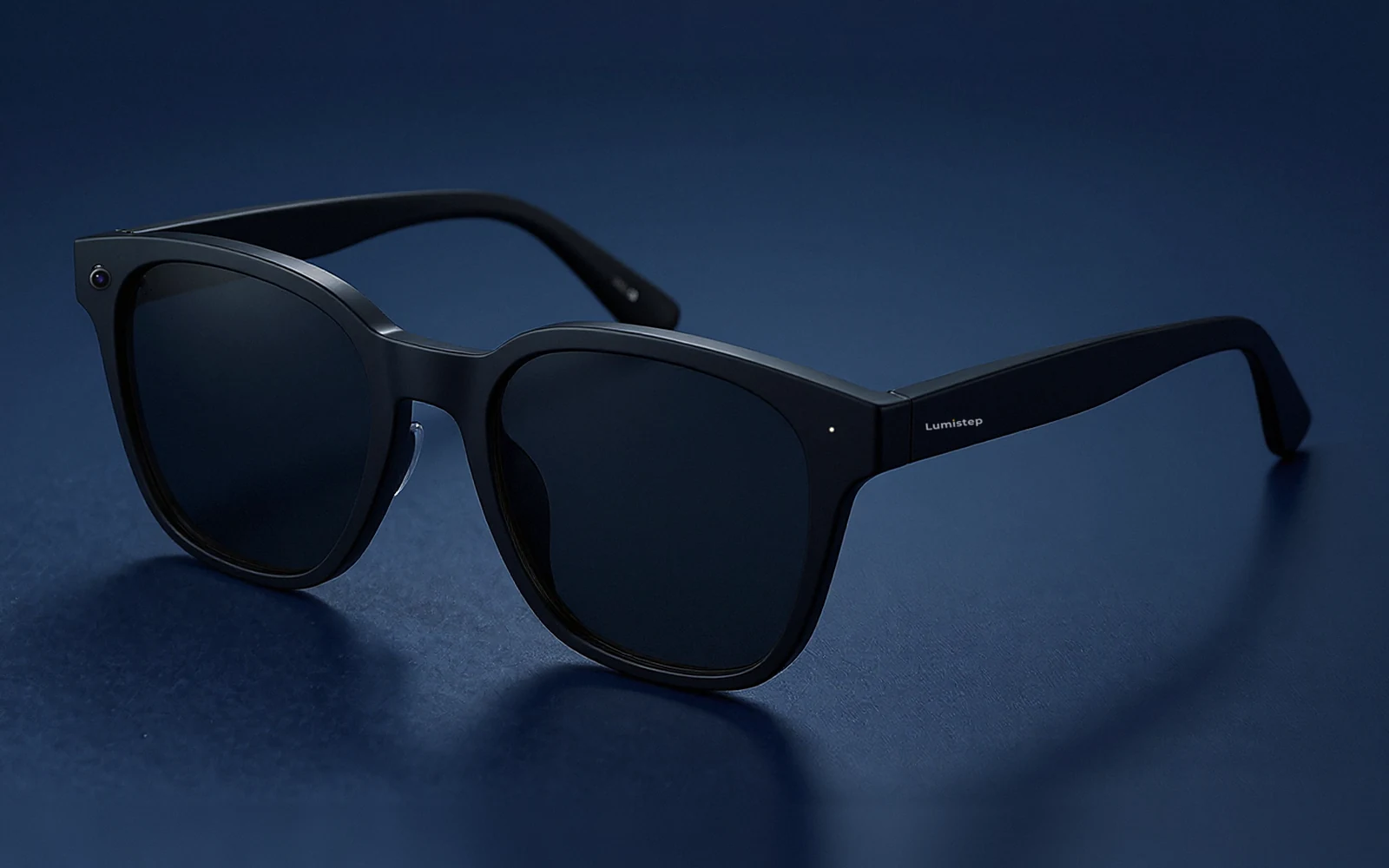
The smart handle with its sensor lens, laser window and guarded thumb pad, the amber Lumi ring, the glasses, buds and clip. The glasses are factory-built to our design.
We buy
Proven chips.
Radar from Acconeer, the laser from STMicroelectronics, Bluetooth chips and an event sensor of the Prophesee GenX320 class.
We test
With blind people.
Field trials with blind participants in February and March 2027, then a field pilot in April and May 2027. Never with blindfolded volunteers.[56]
Questions
Technology questions.
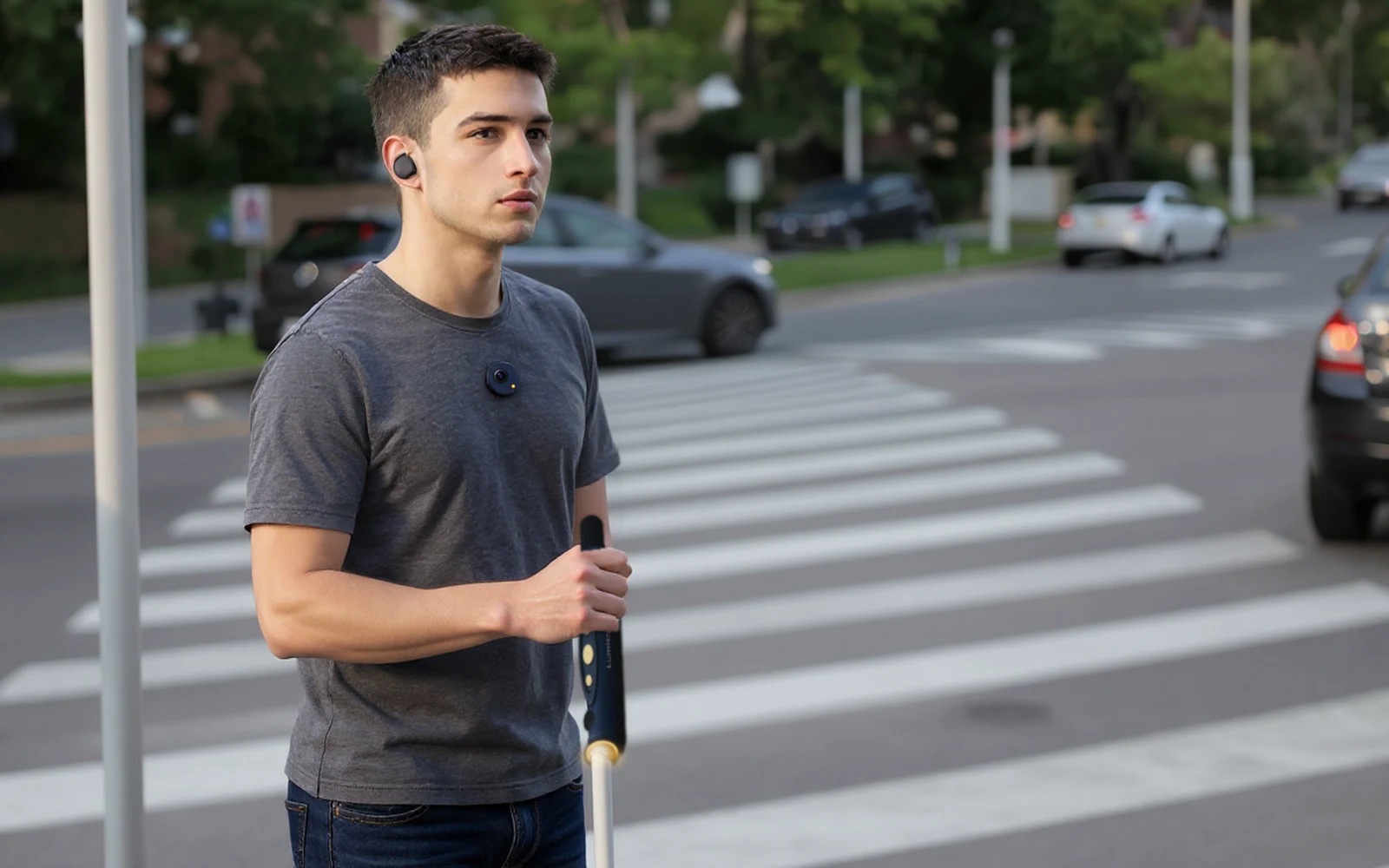
Does Lumistep tell me when it is safe to cross?
No. Lumistep warns you about things in front of you. It never tells you it is safe to cross a road. Crossing decisions stay with you, your cane or dog, and your training. Read our honest limits.
What happens if the battery runs out?
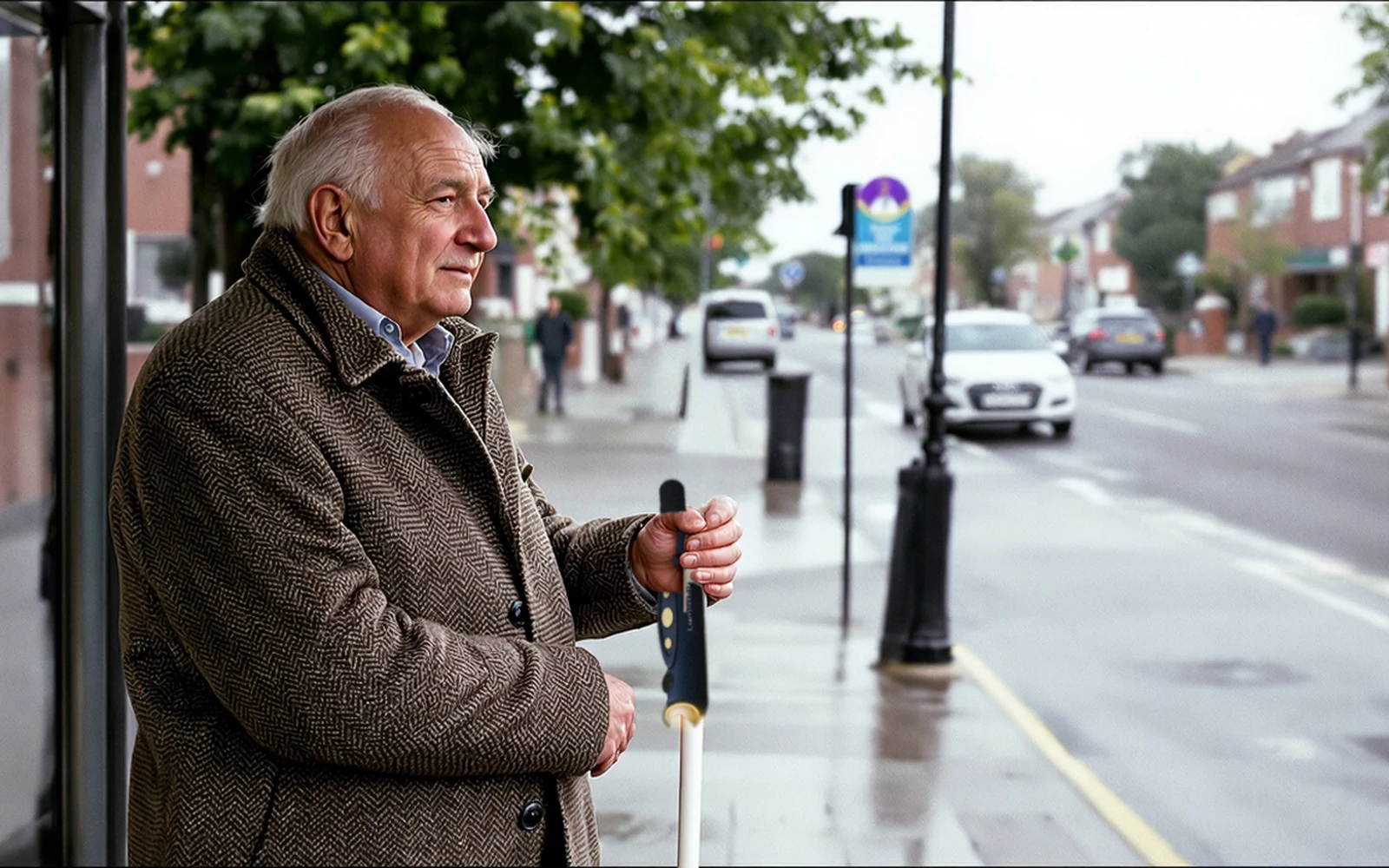
It still works as a folding white cane. You lose the extra warnings, not the cane.
Does the cane need my phone?
No. Obstacle warnings run inside the cane. The phone adds maps, reading, calls and settings.
Do the glasses take photos?
Lumi Vision uses an event sensor, which registers changes rather than taking ordinary pictures. Whatever the sensor, our privacy promise is the same: a light whenever it is looking, processing on the device first, and nothing stored by default. If tests show we need a reading camera, it will switch on only in Read mode, and only when you ask. Read our privacy promise.
Does it work in rain and bright sun?
Have you tested it with blind people?
Not yet. Lumistep is in engineering development. Field trials with blind participants in South Asia and the UK begin in February 2027, followed by a field pilot in April and May 2027. Until then, every number here is a component rating or someone else's research.
Lumistep
Get involved
Three ways to help blind and low-vision people walk, read and travel on their own.
For people and families
Join the waitlist
Hear first about field trials and the first production kits, and help shape what we build.
Join the waitlistFor charities, trainers and sponsors
Support Lumistep
Sponsor a kit, host a field trial or partner with us to reach the people who need it most.
Ways to supportFor investors
Invest in Lumistep
We are raising our first round to complete engineering and field trials. Let's talk.
For investors