
Lumistep Cane
Feels the path ahead.
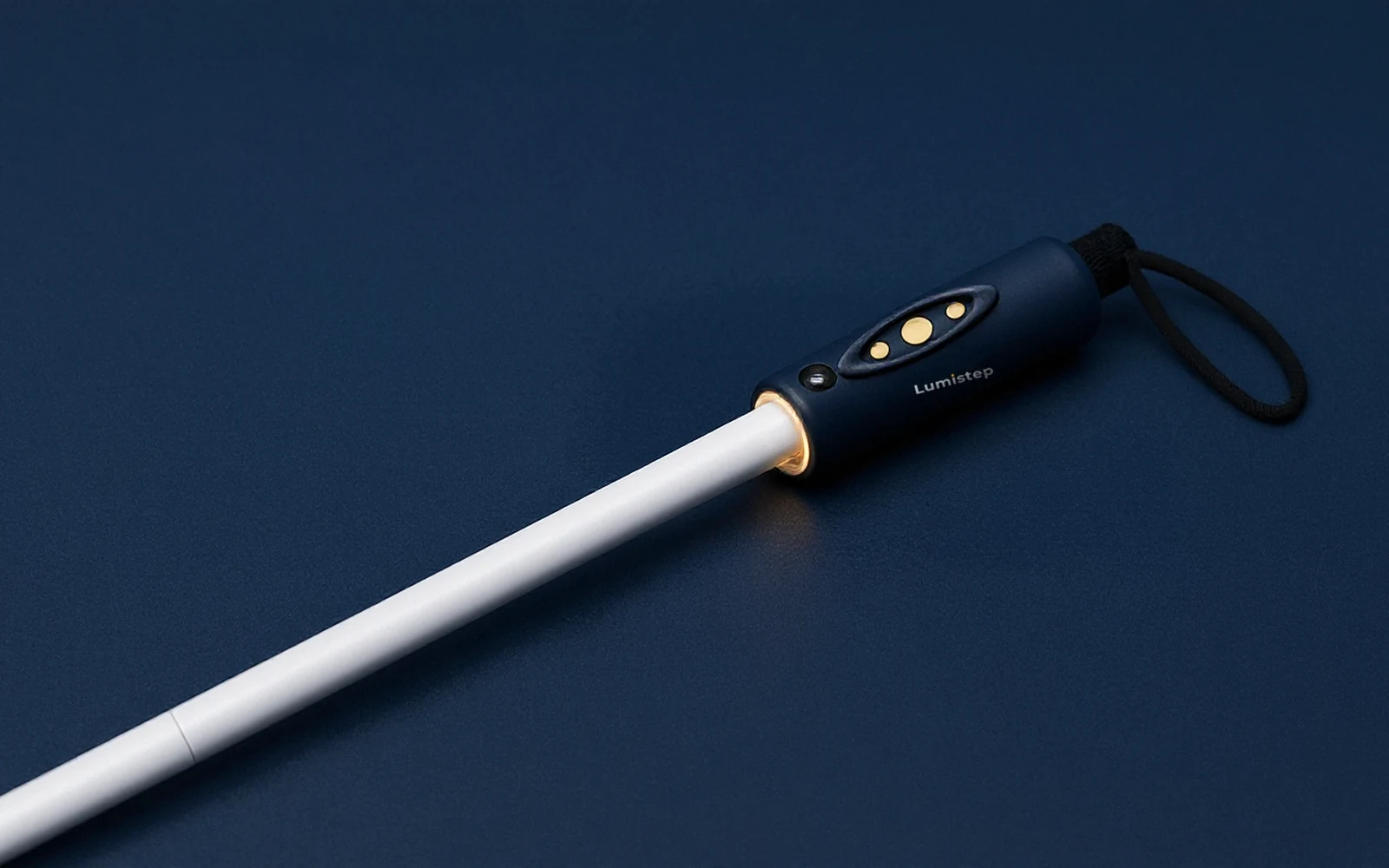
The Lumistep Smart Cane. A slim smart handle that feels what the tip can’t reach: the low branch, the open drain, the edge of a step. It tells you with a buzz on the side that matters, fully offline.
Planned price, cane only: $99 · £79. Nothing is for sale yet.
Concept image. The Lumistep Smart Cane is in engineering development.
~3 m
how far ahead the radar is designed to feel in Open mode (target)
L · R
haptic motors, so the buzz tells you which side
3–6 wks
of daily walking per charge (target)
$99
planned price for the cane alone
The smart handle
Everything it senses, in the palm of your hand.
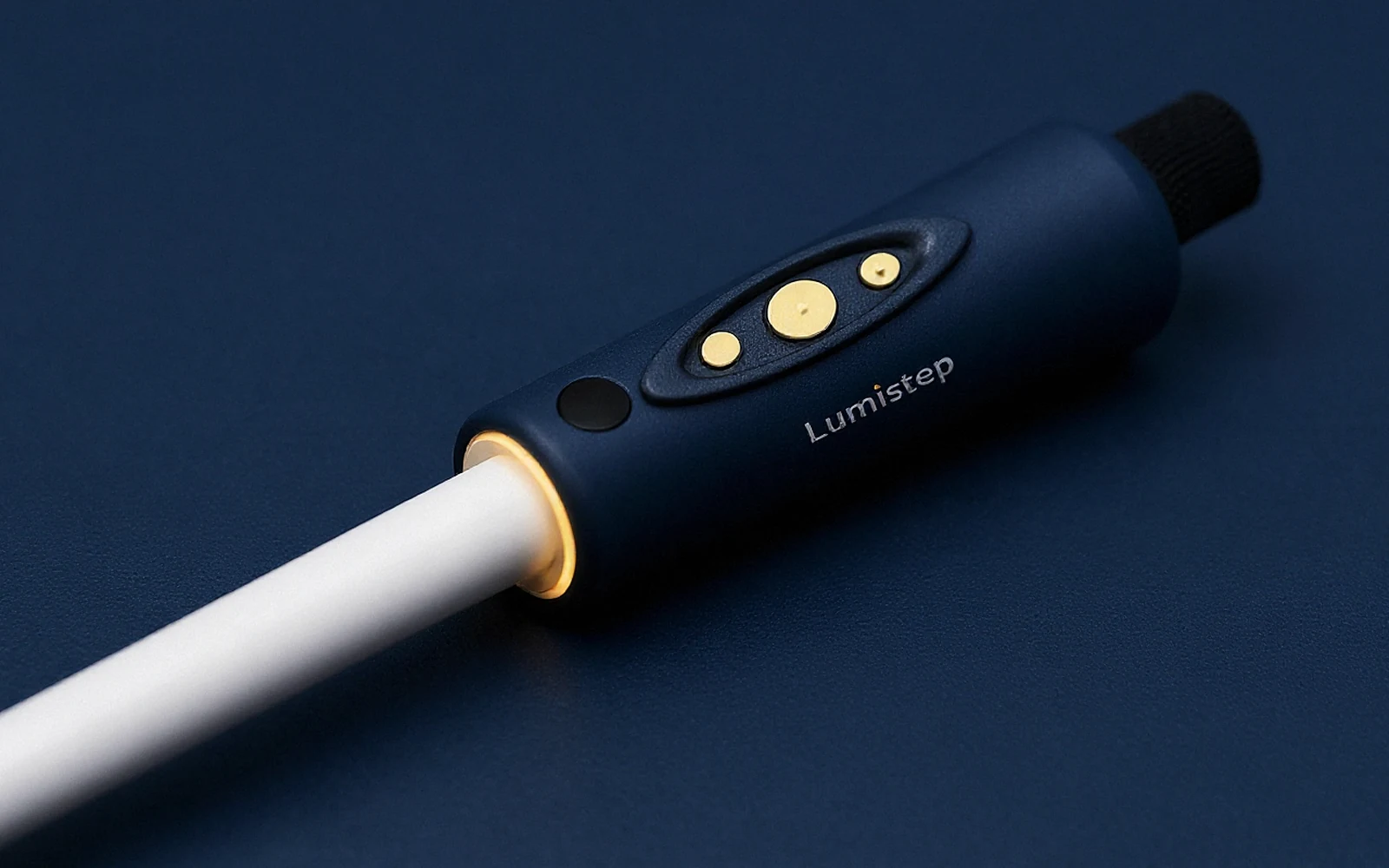
- A small round sealed lens on the front of the handle. Behind it, a 60 GHz radar looks forward and up to head height. The chip is rated to work behind plastic in rain, dust and sun, at about a milliwatt[17].
- Buttons you can find, but can’t press by accident. A recessed oval pad with a raised rim sits under your thumb. Inside are three flush gold buttons: Talk in the centre, the largest, with one dot; Call at the back, with two dots; SOS at the front, ridged. Each needs a firm press.
- Your palm and fingers wrap a smooth, slightly textured navy grip with nothing on it to press, so walking never triggers anything.
- Where the handle meets the shaft, a warm amber ring glows steadily at dusk, so people nearby notice you. It never flashes, and it is amber, not red.
- A small window underneath the handle. The down-facing laser measures the ground about a metre ahead for kerbs, steps and open drains[18].
- Two haptic motors inside the handle. Something on your left, a buzz on your left. Straight ahead, both together.
- A small speaker behind a fine grille, for short spoken status and prompts.
- Charges with a standard USB-C cable. About 3–6 weeks of daily walking per charge (target).
Sensing
A protective bubble in front of you.


A 60 GHz radar
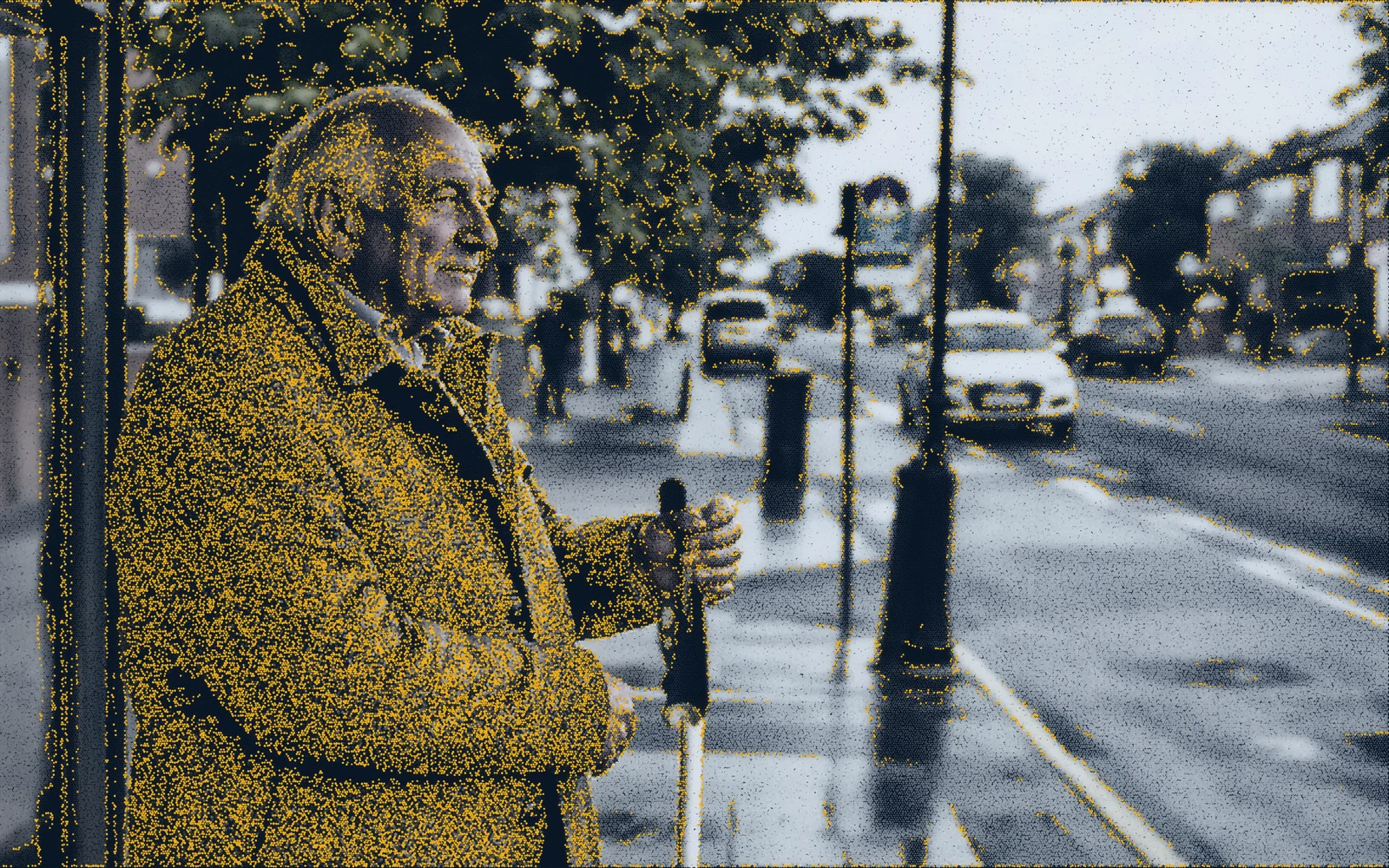
Behind the sensor lens, it looks forward and up. It is not bothered by sun, dust, rain or colour[17].
A down-facing laser
It measures the ground about a metre ahead, to catch steps, kerbs and open drains[18].
A 6-axis motion sensor
It follows your swing. The cane only buzzes for things in your walking path, checks twice before it buzzes, and stays quiet about people walking ahead of you at your pace.
Three modes, one button
A crowded market should not feel like a wall of buzzing.
Street mode· default
Everyday pavements and lanes.
- Very near
- under 0.7 m
- Near
- 0.7–1.2 m
- Far
- 1.2–2 m, optional
Planned settings. Distances are design targets, tuned in field trials with blind participants from February 2027. The dashed band shows where the ground laser looks, about 0.8–1.3 m ahead.
How it feels
Two things to learn: where, and how close.
Getting closer
Pulses speed up as you get nearer, about 3 a second when near and 8 a second when very near, then turn into a steady buzz.
Planned patterns. Blind participants compare them in field trials from February 2027, before anything is fixed.
Controls
Buttons you can find, but can’t press by accident.
Centre · one dot
Talk
The largest button. Press and hold for about half a second, then speak: “Hey Lumi, take me to the pharmacy.”
Rear · two dots
Call
Press twice to call the person you chose, through your glasses, buds or phone.
Front · ridged
SOS
Hold for 3 seconds while a rising buzz counts down. Let go before the end to cancel. Then your location goes by text message to people you chose.
A firm press
About 4 N with a clear click, so brushing past a bag or a coat does nothing.
Swing lock
Quick single taps are ignored while the motion sensor feels the cane swinging.
Always confirmed
Every action is confirmed with a short buzz and voice, and one press undoes it.
Planned design and gestures; field trials from February 2027 confirm them.


The Lumi ring
A soft amber glow. Never a flash.
Where the smart handle meets the white shaft, an amber ring glows softly and steadily at dusk, so people nearby notice you.
It never flashes or blinks. It is amber, not red, so it can never be mistaken for a deafblind band.
We are honest about it: we found no study yet showing that a light on a cane helps drivers see you sooner. The reflective white shaft does the main night-time work. The ring is a status light and our signature, with visibility as a bonus.
The shaft
All white. Reflective. Folds to 33 cm.
A white shaft is the signal the law and the public recognise. Ours is all white, wrapped in reflective film that catches headlights, with navy collars at each joint.
No red bands: in the UK they mean the user is deafblind[33]. A deafblind edition with the recognised red bands is on our roadmap.
Four sections fold on an elastic cord to about 33 cm. A replaceable roller tip glides over cracked pavements and broken kerbs. All the electronics live in the handle, so the shaft clicks off and is simple to replace.
Battery and safety
Weeks between charges. Useful even when flat.
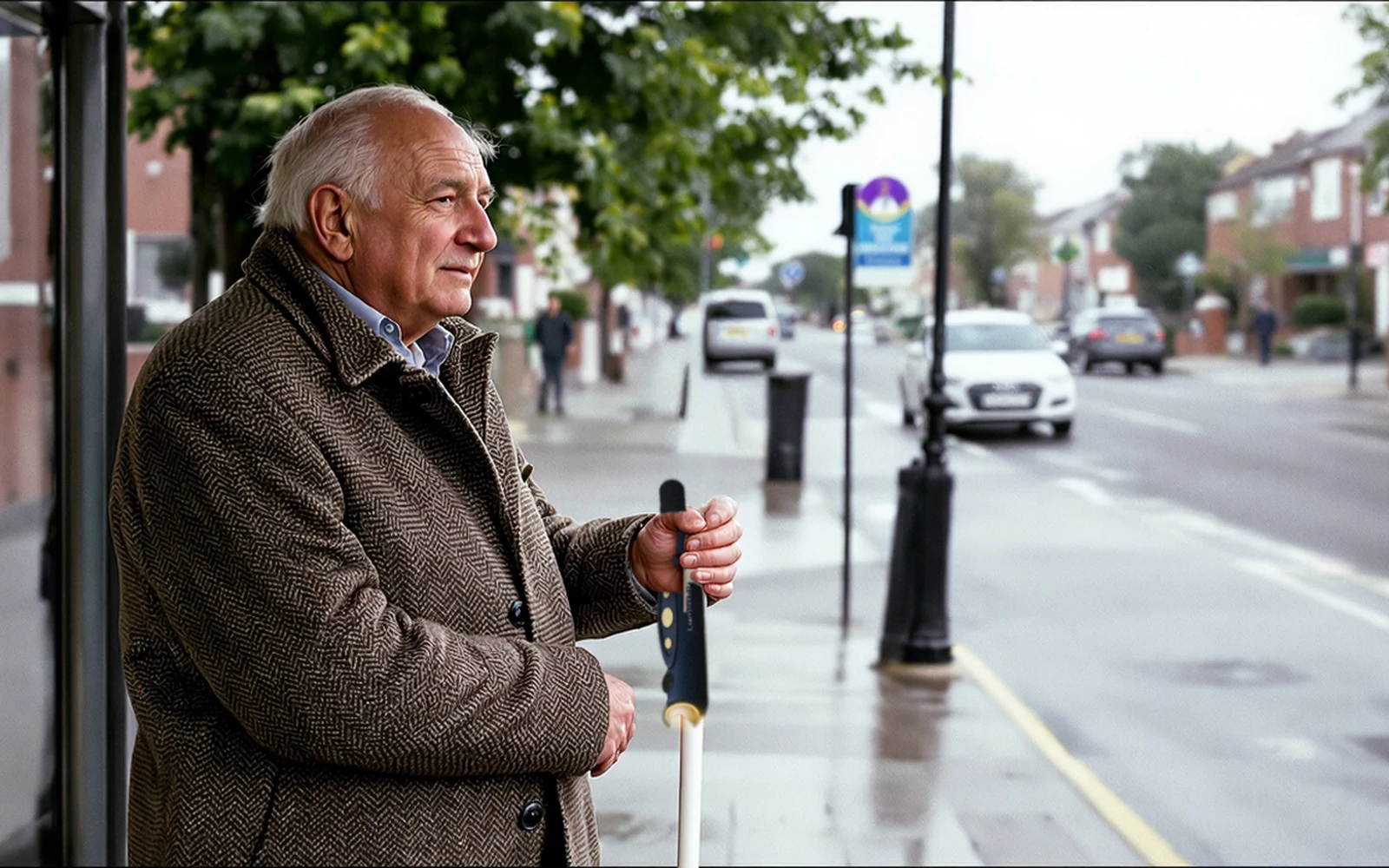
3–6 weeks per charge (target)
An 800 mAh cell in the handle is designed to last about 3–6 weeks of daily walking. It charges with a standard USB-C cable.
Still a cane when flat
If the battery runs flat, you still hold a complete, normal white cane.
The cane warns. It never decides.
It will never tell you it is “safe to cross”. Crossing stays your call, made with your skills and your hearing.
Compare
A smarter cane, at a fraction of the price.
Lumistep Smart Cane
WeWALK Smart Cane 2
- Obstacles ahead
- One upward ultrasonic sensor
- Drops, kerbs and steps
- The cane tip
- Which side
- —
- Without a phone
- —
- At night
- —
- Price
- About $850[19]
| Lumistep Smart Cane | WeWALK Smart Cane 2 | |
|---|---|---|
| Obstacles ahead | 60 GHz radar that works in rain and dust[17] | One upward ultrasonic sensor |
| Drops, kerbs and steps | Downward laser window[18] | The cane tip |
| Which side | Left and right haptic motors | — |
| Without a phone | Senses and buzzes fully offline | — |
| At night | Amber Lumi ring | — |
| Price | $99 · £79 planned, cane alone | About $850[19] |
Lumistep figures are design targets; we have no test results of our own yet. WeWALK details are from its public product information; a dash means the feature is not listed there.
Tech specs
Every detail, on one page.
- Length
- 110–140 cm, in sizes
- Folded
- About 33 cm, four sections
- Weight
- 340–420 g aluminium; about 280 g graphite (target)
- Water and dust
- IP65 (target)
- Charging
- USB-C, 3–6 weeks per charge (target)
- Planned price
- $99 · £79, cane only
The Lumistep family
Made to work together.
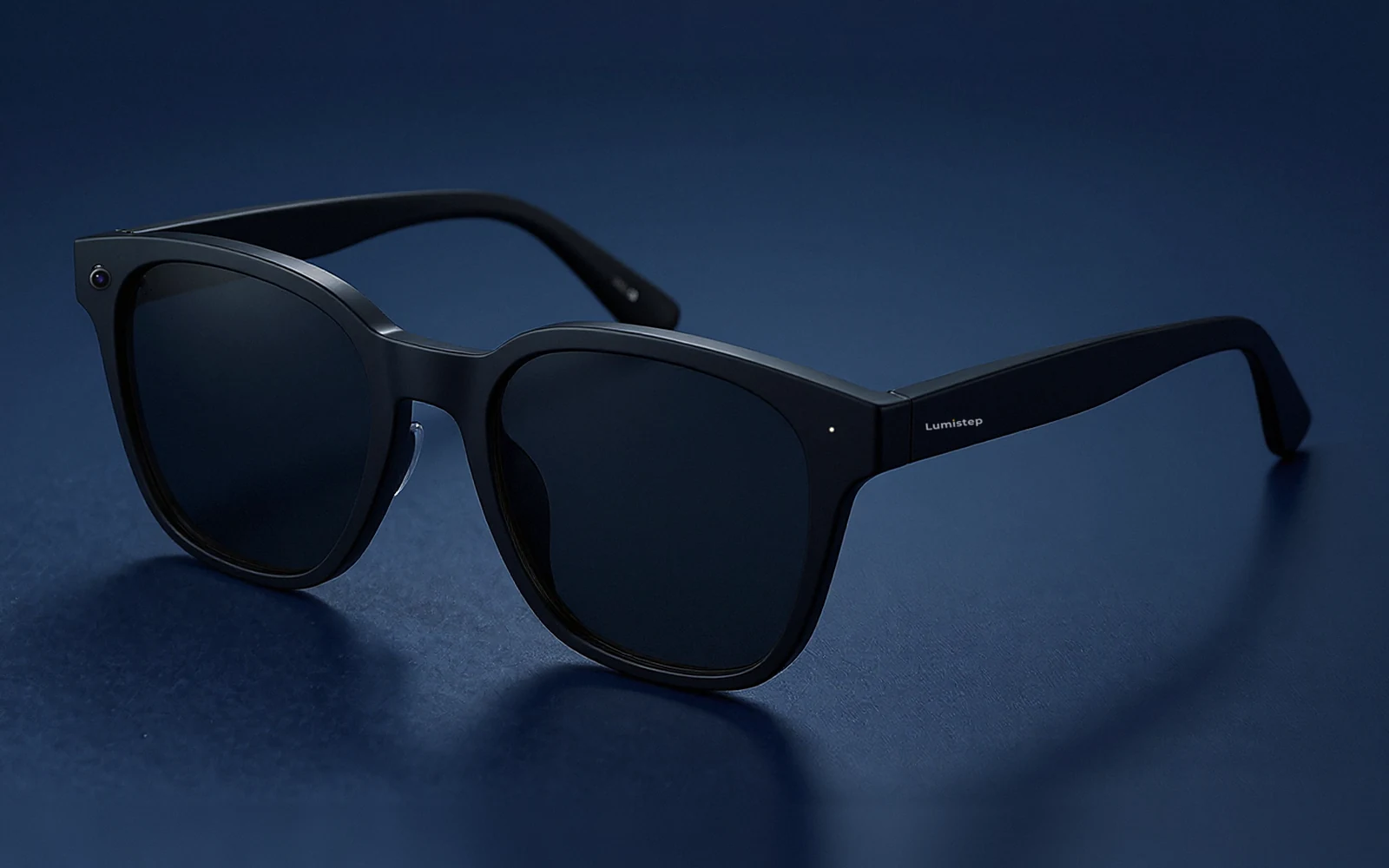
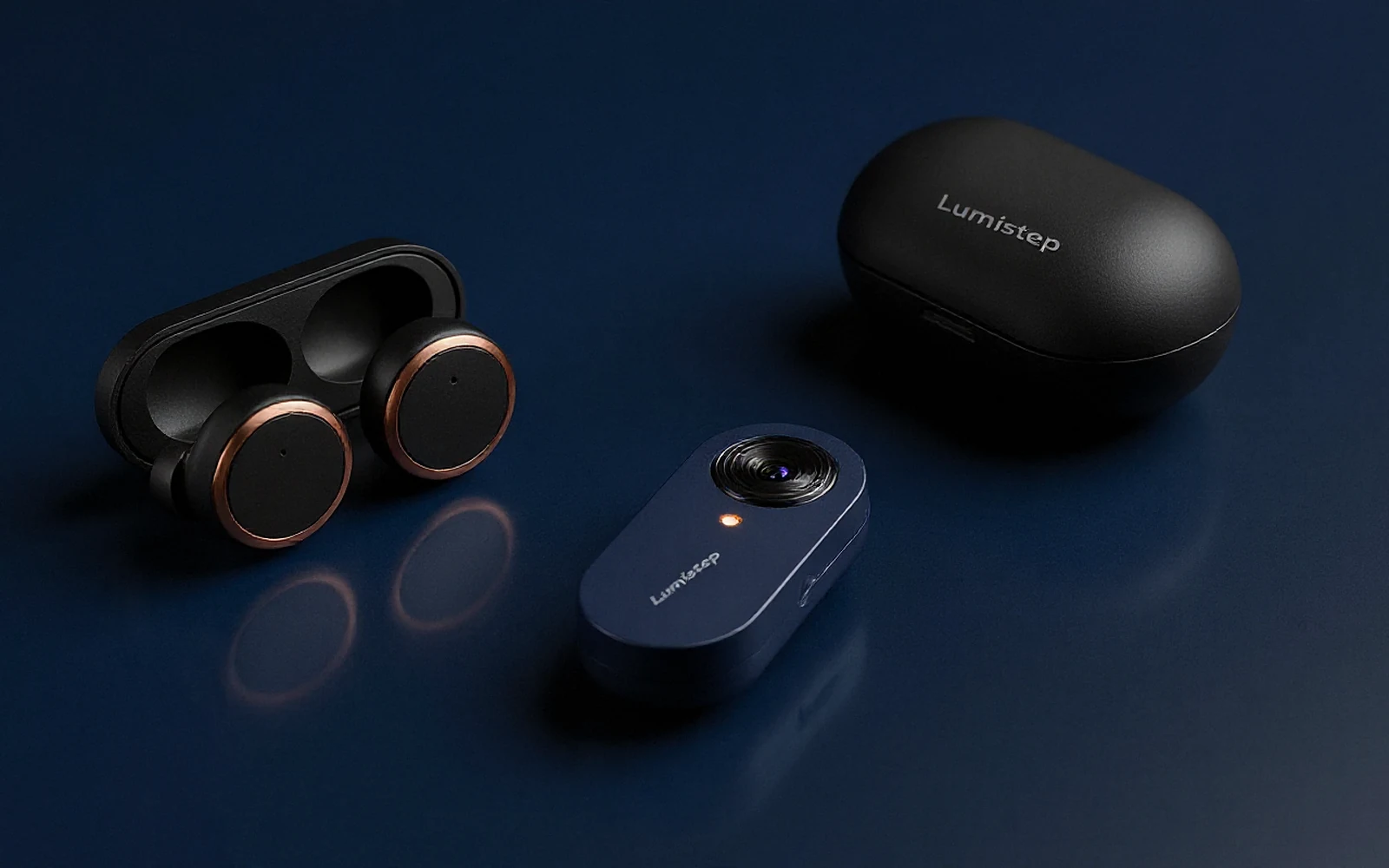
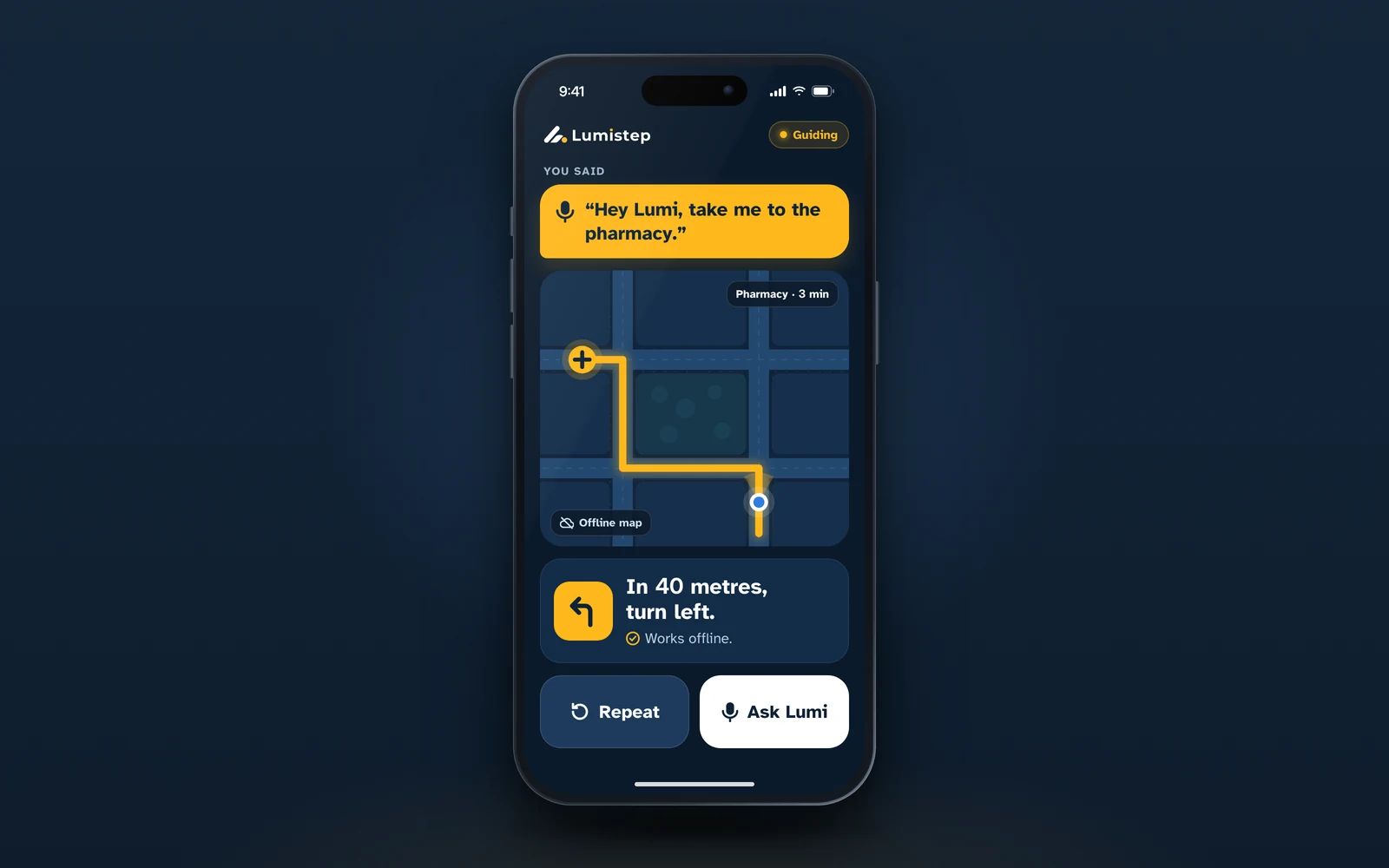
Lumistep
Get involved
Three ways to help blind and low-vision people walk, read and travel on their own.
For people and families
Join the waitlist
Hear first about field trials and the first production kits, and help shape what we build.
Join the waitlistFor charities, trainers and sponsors
Support Lumistep
Sponsor a kit, host a field trial or partner with us to reach the people who need it most.
Ways to supportFor investors
Invest in Lumistep
We are raising our first round to complete engineering and field trials. Let's talk.
For investors