Lumistep
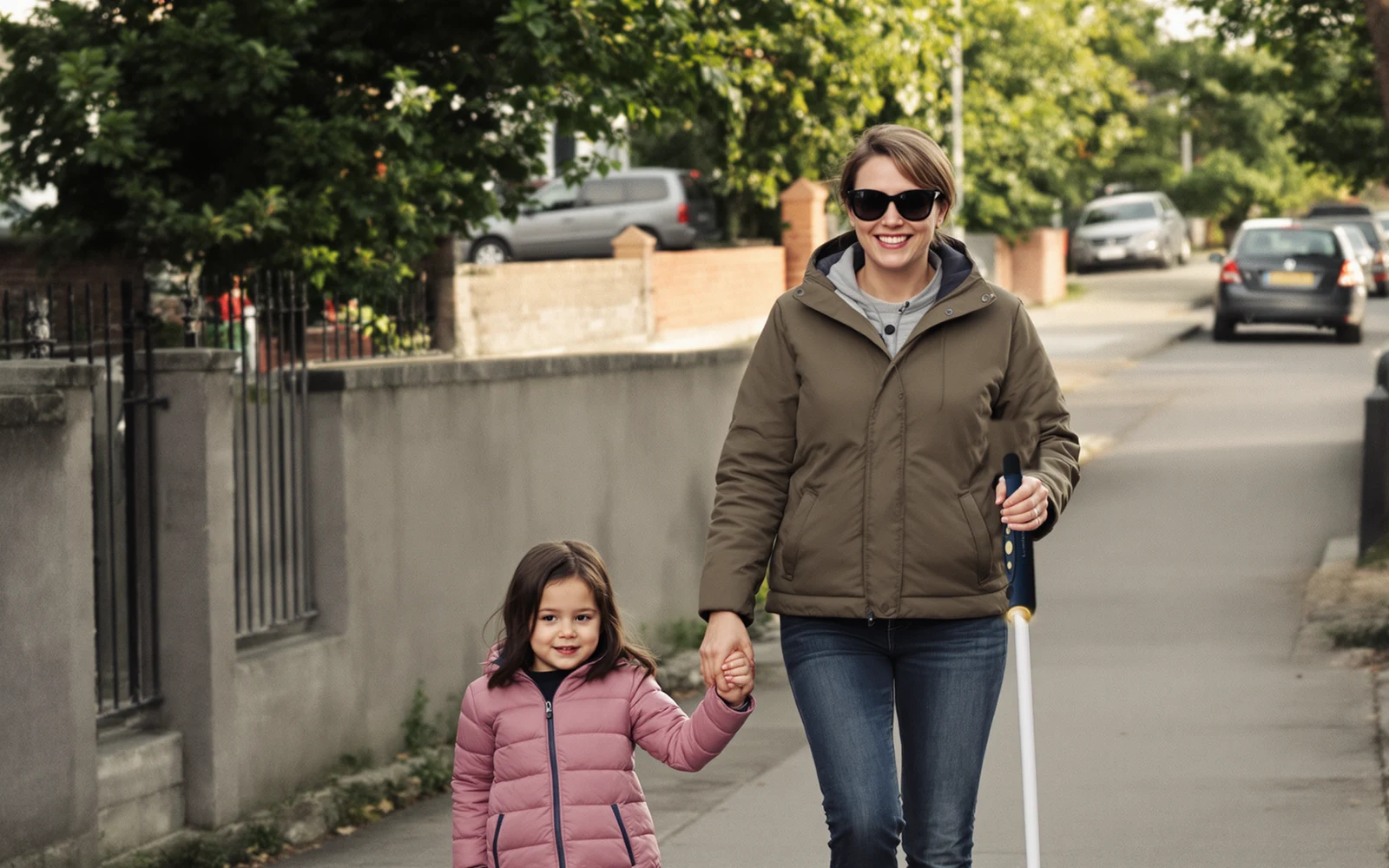
A blind mother walks along an ordinary pavement with her white cane, her young daughter beside her.

In development · nothing for sale yet

Impact

Independence has a value. Our pilot measures it.

Sight loss costs families, employers and economies billions every year, and the poorest pay most. We publish our numbers, our sources and our assumptions, and every estimate here is replaced with pilot data as it arrives, good or bad.

US$411B
: lost to the world economy each year through sight loss (working-age people, 2018 PPP dollars)[134]
90%
: of people with sight loss live in low- and middle-income countries[1]
US$651
: less per person than the best-known smart cane, at our planned US$199 kit price
None yet
: of the studies we found prove that any smart cane changes outcomes. Our pilot measures it from April 2027.

The cost of sight loss

A global problem that hits the poorest hardest.

These are the baseline numbers our work starts from. Every one links to its source.

The world

lost each year in productivity through blindness and moderate or severe sight loss. Working-age people only, in 2018 PPP dollars.[134]
$411B
of that loss falls in South Asia, the biggest share of GDP of any region. It is where we start.[134]
$62B
people are blind, and 295 million more have moderate or severe sight loss (2020).[2] In South Asia: 11.9 million blind.[3]
43M
of people with sight loss live in low- and middle-income countries.[1]
90%

Families, health and getting around

as likely to fall, for people with reduced vision.[140][8]
1.7×
of family help a year, typically, for the 4 in 10 people with sight loss who relied on it in a Portuguese study.[9]
390 h
of family care a week in one US study, rising as sight loss becomes severe.[118]
6–94 h
a week more is what a working-age adult with severe sight loss in the UK needs for the same minimum standard of living.[141]
£120

Access and opportunity

people need assistive products; in some low-income countries only 3% get them.[4]
2.5B
the factory price is what people pay for assistive products in poorer countries.[5]
Up to 6×
of registered blind and partially sighted people of working age in the UK are in paid work, against 76% of everyone (RNIB, 2020).[6]
27%
of working-age adults with visual impairments in the US are employed, against 76% of the general population (2023).[139]
52%

Most vision loss is treatable with cataract surgery or glasses.[135] Lumistep is for people whose sight cannot be restored. It supports, and never replaces, cane training, guide dogs or eye care.

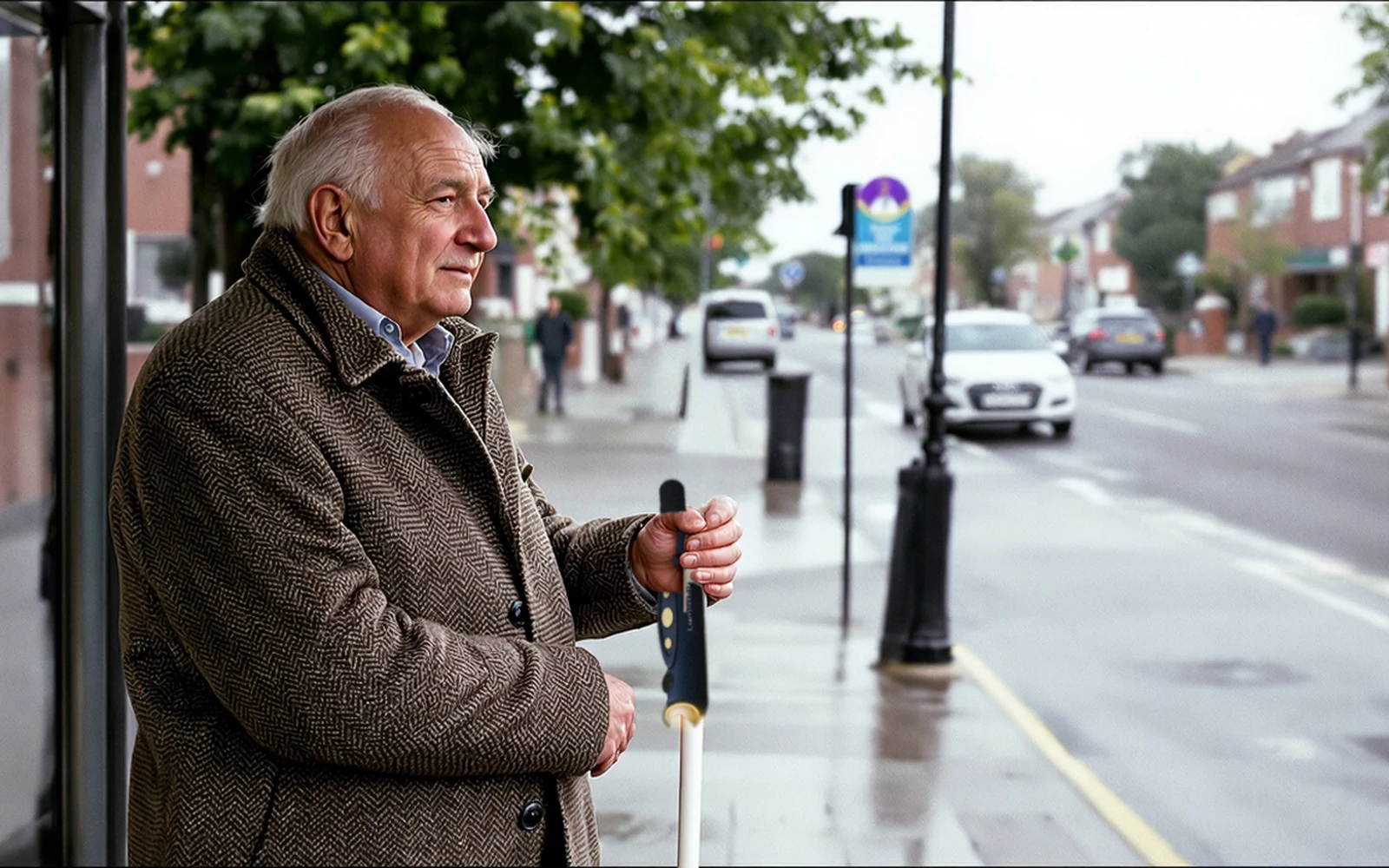
An older man with a white cane waits at a bus stop in light drizzle.
Illustrative scene. Lumistep is in development.

Who gets help

Price decides who gets help.

Nine in ten people with sight loss live in low- and middle-income countries. In Bangladesh or India, a premium smart cane costs about a third of a year's average income, and over half in Pakistan or Nepal.[138] So it stays in the shop. Our kit is planned at a price that changes that.

Saving millions

The same money, four times the people.

Price decides who gets help. At our planned price, every budget an NGO, government or donor spends on smart canes reaches more than four times as many people.
$651
: less per person: our planned US$199 kit against US$850 for the best-known smart cane.[19]
$6.5M
: saved for every 10,000 people equipped: 10,000 × (US$850 − US$199) = US$6.51 million.
4.3×
: as many people reached for the same budget: US$850 ÷ US$199 = 4.27.
One budget of US$8.5 million equips…One dot = 1,000 people, rounded to the nearest dot.

Fair comparison, stated plainly

The premium product is a cane only; our kit also includes glasses or buds. Comparing cane with cane, ours is planned at US$99, US$751 less.

Our prices are planned retail prices; nothing is on sale yet. South Asian price converted at US$1 = Tk 122 = ₹88.

US$850 is the US retail price of the best-known smart cane; its AI voice assistant was sold with a monthly fee, or at US$1,150 without one.[147]

Our impact model · illustrative

What 10,000 kits could change in a year.

This is a planning model, not a result. Read it as: if our pilot shows X, then 10,000 kits would free Y. Inputs with a source are cited; everything else is marked as our assumption.

Illustrative model · not a result
If the pilot shows this much less family help

Applied to the 4,000 of every 10,000 users who get family help today, at 390 hours a year each.

Hours of help freed a year
156,000
Eight-hour days
19,500
Value at the European benchmark
≈ €1.03 million

Every line of the model

  • Users who get family help today

    Input
    40% of people with sight loss
    Source or assumption
    Portugal study, 546 patients[9]
    Result per year
    4,000 of 10,000 users
  • Hours of family help

    Input
    390 hours a year (median)
    Source or assumption
    Portugal study[9]; we use the median, not the 94-hour severe figure[118]
    Result per year
    1.56 million hours
  • Help no longer needed

    Input
    10% fewer escort and help hours
    Source or assumption
    Our assumption, to be measured in the pilot
    Result per year
    156,000 hours ≈ 19,500 eight-hour days
  • Value of that time (European benchmark)

    Input
    €2,586 a year: the value of family carers' time
    Source or assumption
    Portugal study[9]; 10% × €2,586 × 4,000
    Result per year
    ≈ €1.03 million
  • Value in South Asia

    Input
    Local wage
    Source or assumption
    Not yet sourced: we need a cited local wage benchmark
    Result per year
    Not shown until sourced
  • Extra trips taken alone

    Input
    3 a week per active user; 60% active
    Source or assumption
    Our assumptions; 3 × 52 × 6,000
    Result per year
    ≈ 936,000 trips
  • Money saved against premium smart canes

    Input
    US$651 per person
    Source or assumption
    Published price[19] and our planned price
    Result per year
    US$6.5 million (one-off)
Impact model per 10,000 kits: inputs, sources, assumptions and results per year
LineInputSource or assumptionResult per year
Users who get family help today40% of people with sight lossPortugal study, 546 patients[9]4,000 of 10,000 users
Hours of family help390 hours a year (median)Portugal study[9]; we use the median, not the 94-hour severe figure[118]1.56 million hours
Help no longer needed10% fewer escort and help hoursOur assumption, to be measured in the pilot156,000 hours ≈ 19,500 eight-hour days
Value of that time (European benchmark)€2,586 a year: the value of family carers' timePortugal study[9]; 10% × €2,586 × 4,000≈ €1.03 million
Value in South AsiaLocal wageNot yet sourced: we need a cited local wage benchmarkNot shown until sourced
Extra trips taken alone3 a week per active user; 60% activeOur assumptions; 3 × 52 × 6,000≈ 936,000 trips
Money saved against premium smart canesUS$651 per personPublished price[19] and our planned priceUS$6.5 million (one-off)

No study yet proves outcomes

We have found no study showing that any smart cane or camera glasses reduce family care hours, falls or unemployment. Until our pilot reports, we say Lumistep "could help", never that it "saves" or "prevents". The European figures are a reference point only; South Asian values go in once we have a cited local wage benchmark.

How sensitive is it?

The one number that matters most is the share of family help that is no longer needed. Here is the model at three values.

  • 5% less help

    Hours freed a year
    78,000
    Eight-hour days
    9,750
    European-benchmark value
    ≈ €0.52 million
  • 10% less help (our planning case)

    Hours freed a year
    156,000
    Eight-hour days
    19,500
    European-benchmark value
    ≈ €1.03 million
  • 20% less help

    Hours freed a year
    312,000
    Eight-hour days
    39,000
    European-benchmark value
    ≈ €2.07 million
Sensitivity of family help hours freed to the assumed reduction
If the pilot shows…Hours freed a yearEight-hour daysEuropean-benchmark value
5% less help78,0009,750≈ €0.52 million
10% less help (our planning case)156,00019,500≈ €1.03 million
20% less help312,00039,000≈ €2.07 million

SDGs, IRIS+ and the five dimensions

Where Lumistep contributes, and what we measure.

Three lenses impact funders already use. A mapping is an intention; the measures are how we hold ourselves to it.

Mapped to the official UN targets.[119]

  • SDG 3.8 · Health coverage

    Assistive tech within reach

    White canes are a WHO priority assistive product.[87] Measure: kits delivered and share paid by public schemes.

  • SDG 4.5 · Education

    Kits for blind students

    Through schools and district programmes. Measure: students equipped; attendance, with school consent.

  • SDG 8.5 · Decent work

    Travel alone to work or study

    Measure: users in work at baseline and at 12 months (self-reported); disabled people paid by Lumistep.

  • SDG 10.2 · Inclusion

    Priced for low incomes

    Measure: share of users below the national poverty line or on a disability allowance.

  • SDG 11.2 and 11.7 · Cities

    Safer streets and transport

    Measure: solo trips per week and bumps reported, before and after.

  • SDG 17.18 · Data

    Data on barriers

    Anonymous, consented reports on street barriers. Measure: reports shared with NGOs and city authorities.

How we measure

A two-month field pilot, published in full.

April to May 2027, with a blind charity, after field trials with blind participants in February and March. Methods are agreed before we start, results are published whether they are good or bad, and the same measures continue after launch.
  1. 01

    Before day one

    Consent and baseline

    Informed consent in English or the tester's own language, in accessible formats. Baseline interview: trips, bumps, family help hours, work and current aids.

  2. 02

    Week 1

    Training

    Cane and app training with an orientation and mobility trainer. The cane stays the main tool.

  3. 03

    Weeks 1–8

    Weekly diaries

    Short spoken or written diaries of solo trips, bumps and help needed. Device logs only with opt-in consent.

  4. 04

    Month 2

    Follow-up and QUEST 2.0

    Repeat the baseline questions and the QUEST 2.0 satisfaction score. Family members asked separately about help hours.

  5. 05

    Months 6 and 12

    Do people keep using it?

    Retention check with pilot users and, after launch in late 2027, with early customers: still active, how often, and why people stopped.

  6. 06

    After

    Publish and update this page

    Full results, including what did not work. The 10% assumption above is replaced with measured data.

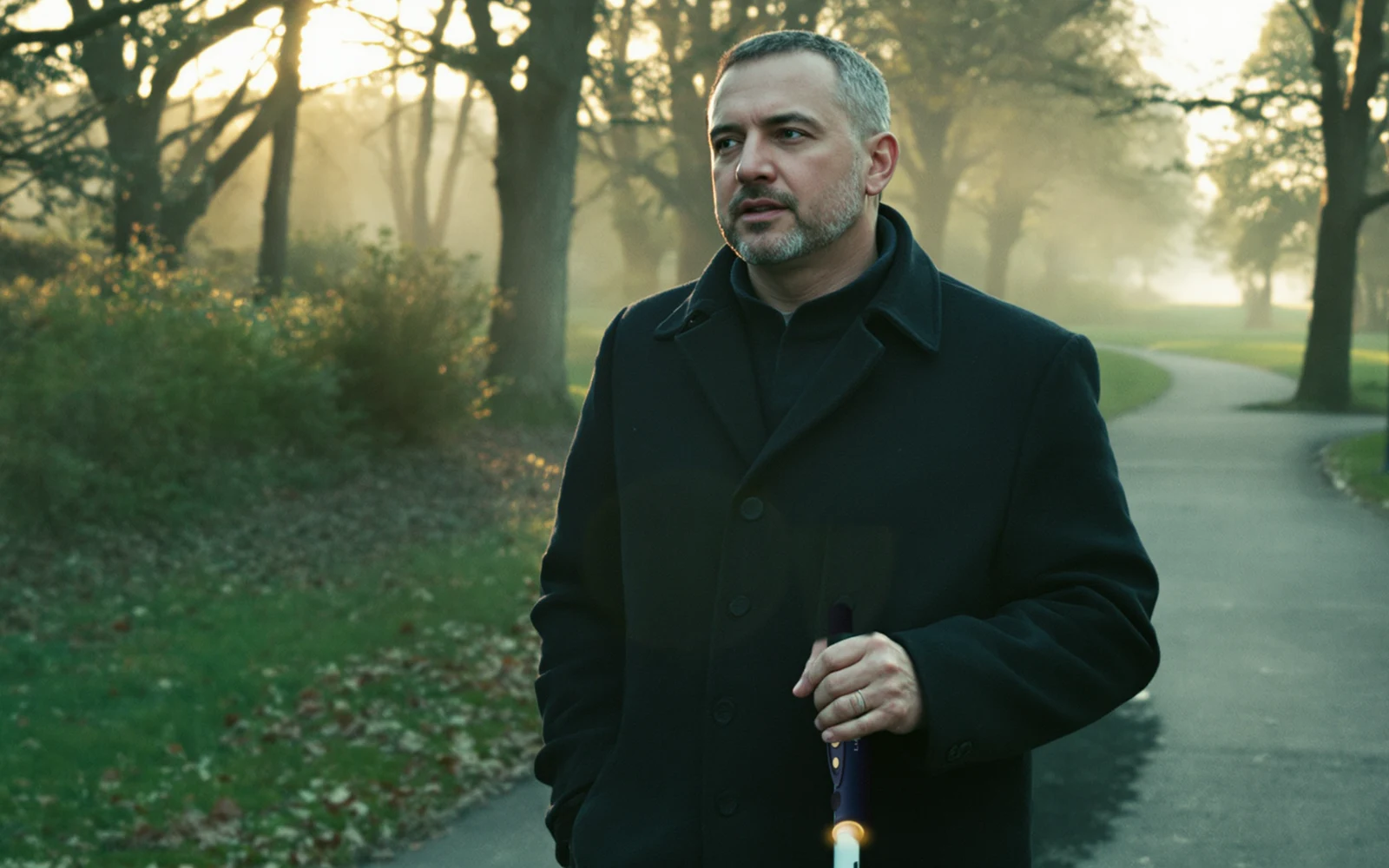
A man walks with a white cane along a park path at dawn.

Run the pilot with us

We are looking for blind charities, schools, eye hospitals and researchers to co-design and independently check our pilot. No partner is signed yet.

Joining is free. No payment, no obligation. We only use your details to send Lumistep news.

Lumistep

Get involved

Three ways to help blind and low-vision people walk, read and travel on their own.

  • For people and families

    Join the waitlist

    Hear first about field trials and the first production kits, and help shape what we build.

    Join the waitlist
  • For charities, trainers and sponsors

    Support Lumistep

    Sponsor a kit, host a field trial or partner with us to reach the people who need it most.

    Ways to support
  • For investors

    Invest in Lumistep

    We are raising our first round to complete engineering and field trials. Let's talk.

    For investors