
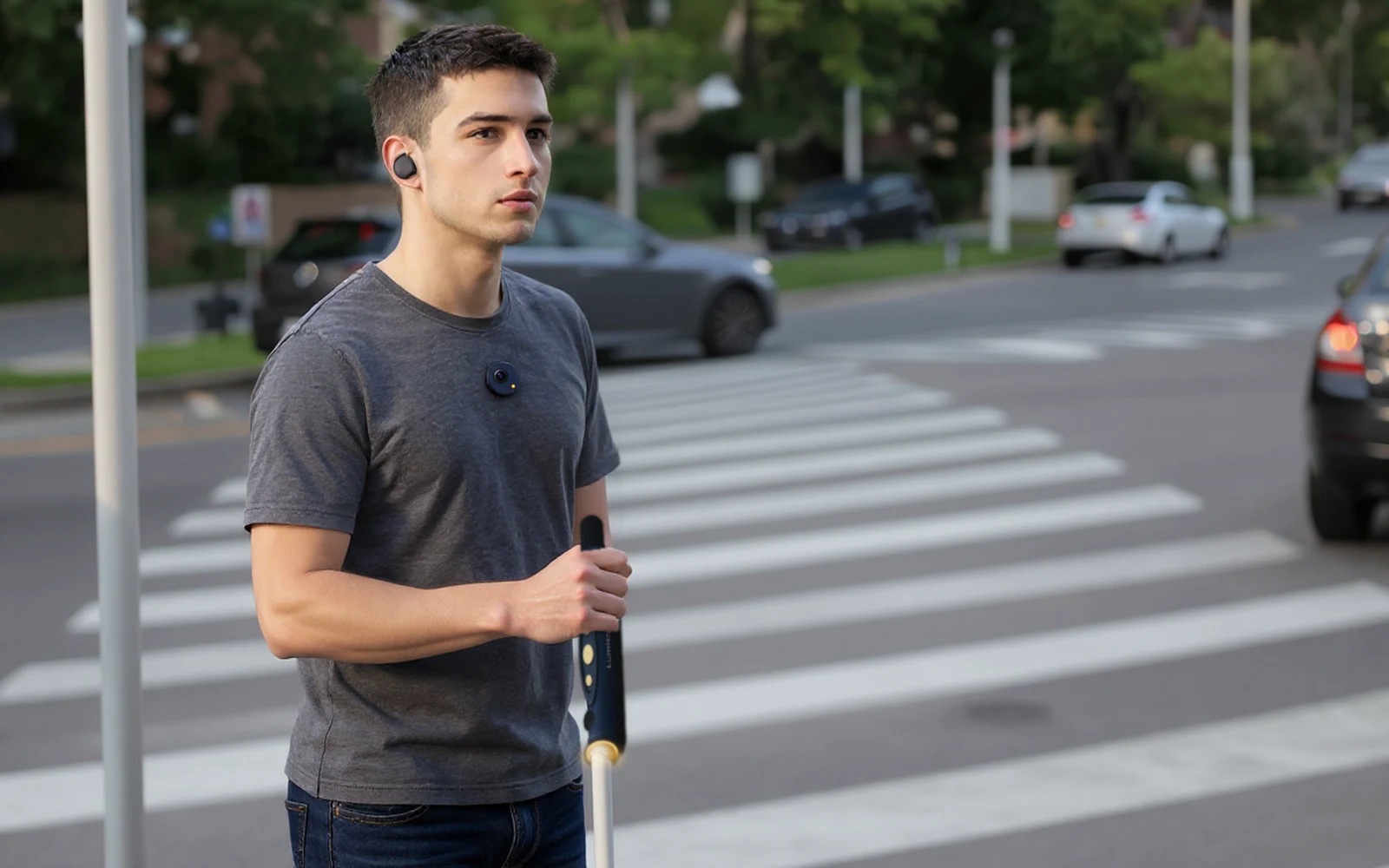
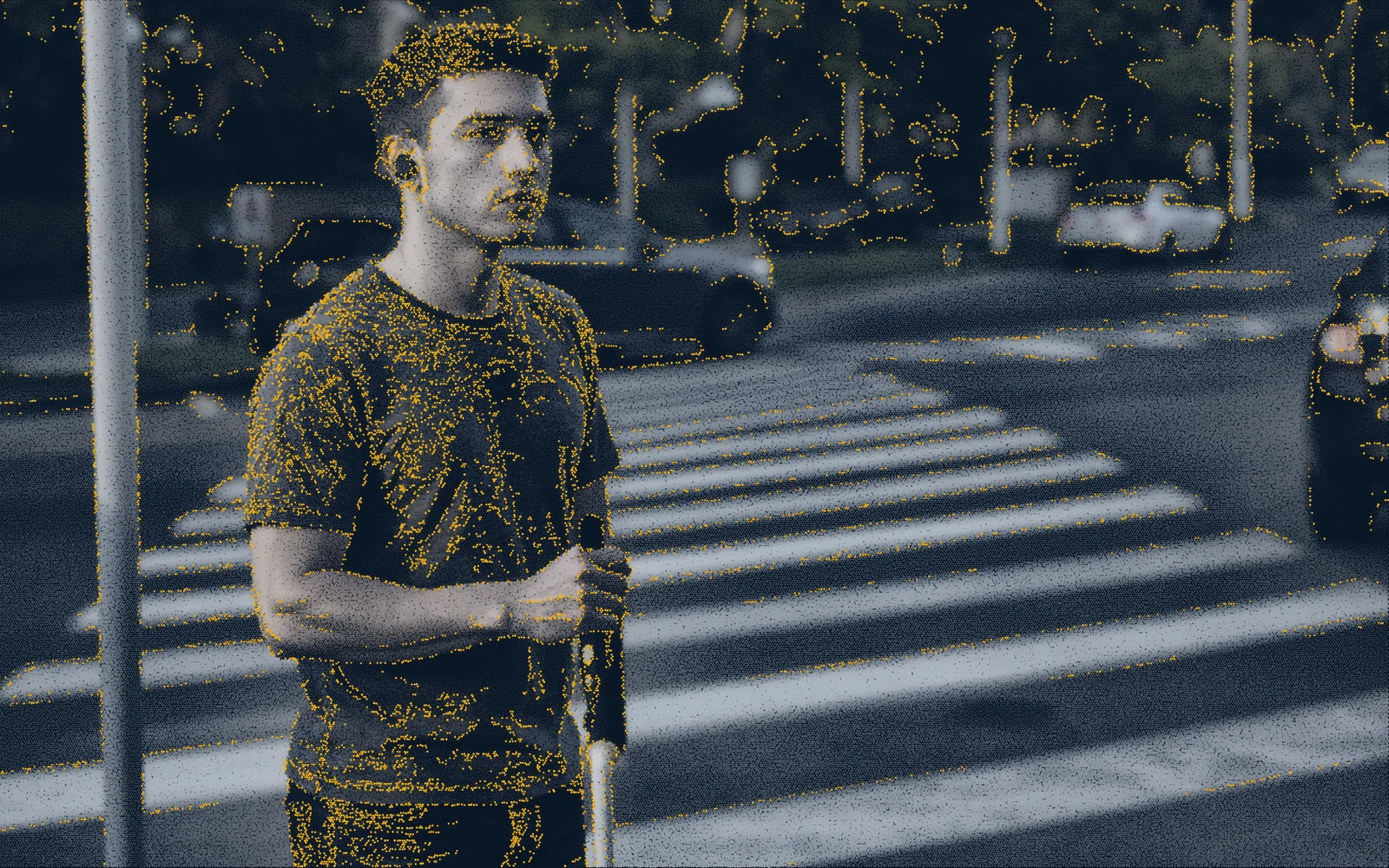
In engineering development · illustrations, not sensor output
TechnologyLumi Vision
A camera that only processes what changes.
Lumistep Glasses and the buds' clip use an event sensor, sometimes called a neuromorphic camera. We chose it as an engineering decision, for three reasons: much longer battery life, a simpler device, and steady performance over a long life. Use the switch on the photo to see the same moment as Lumi Vision might register it.
How event sensing works
Change in. Words out.
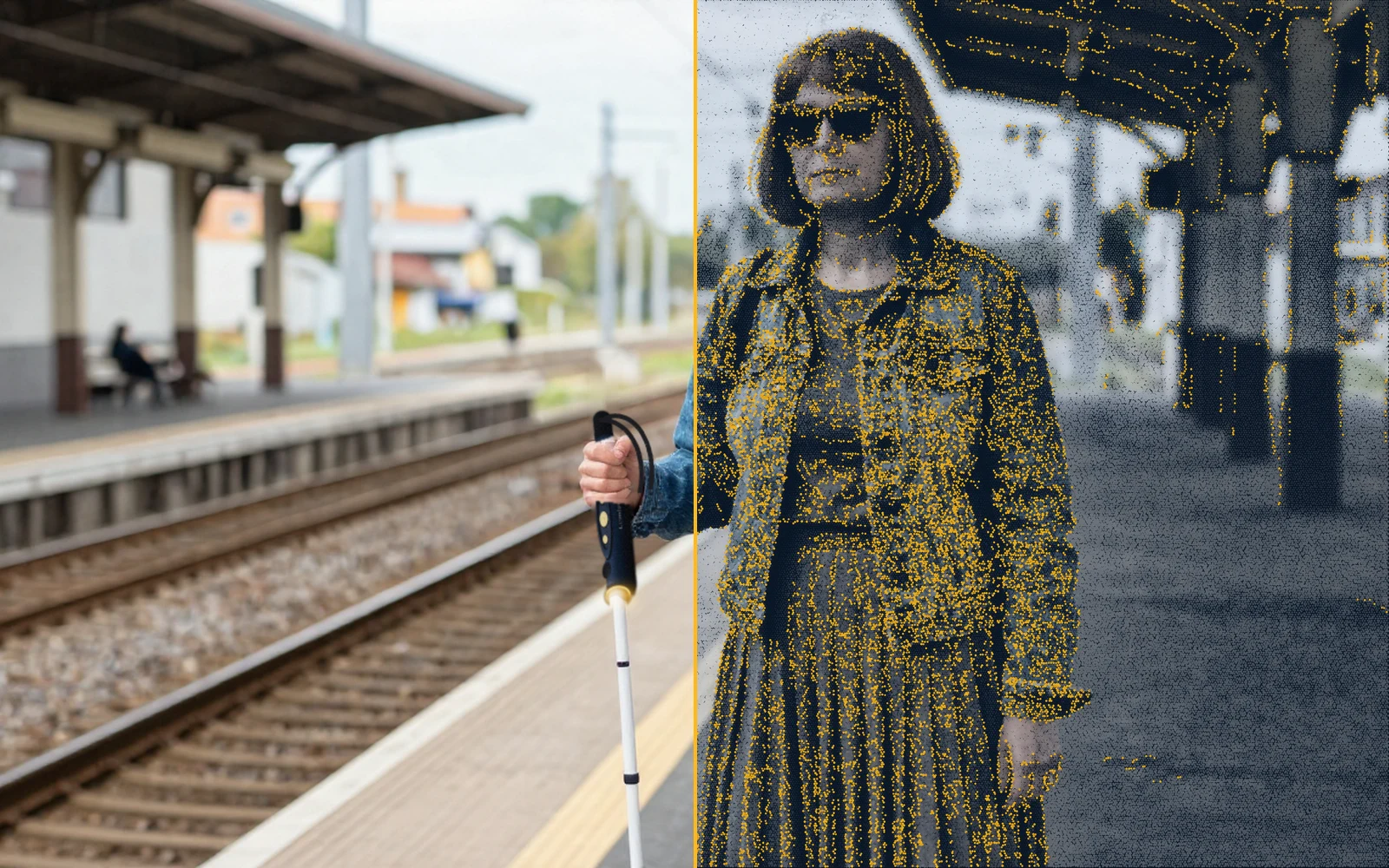
When a person steps out, a bike comes closer or a door opens, only the pixels that see the change send an event, with its place and time, in microseconds.[42]
Over a busy walk that adds up to a vast stream of events (billions, by our estimate) describing edges, shapes and movement. Small AI models on the device turn them into a few spoken words, like “bike coming, left”. Because a still background sends almost nothing, there is far less data to move and process than with an ordinary camera.
- ChangeA pixel sees brightness change and sends one event: where, and when.
- ShapeEvents from edges and movement build an outline of what is moving or getting closer.
- MeaningSmall AI models on the device decide what matters on a street.
- WordsA few spoken words through open-ear speakers, or a buzz from the cane.
Why we chose it
Longer battery, simpler device, steady for years.
Much longer battery life.
A simpler device.
Less data means a smaller processor, a smaller battery and Bluetooth instead of Wi-Fi, so the whole device stays simpler and lighter. This is our engineering judgement, to be confirmed in lab validation.
Stable over a long life.
About 140 dB of light range against about 60 dB for ordinary cameras,[42] so bright sun, shade and dusk need no constant adjusting. Low power also means less heat inside a small frame. Long-life behaviour is on our 2027 test list.
Where Lumi Vision lives
Glasses you would choose for how they look.
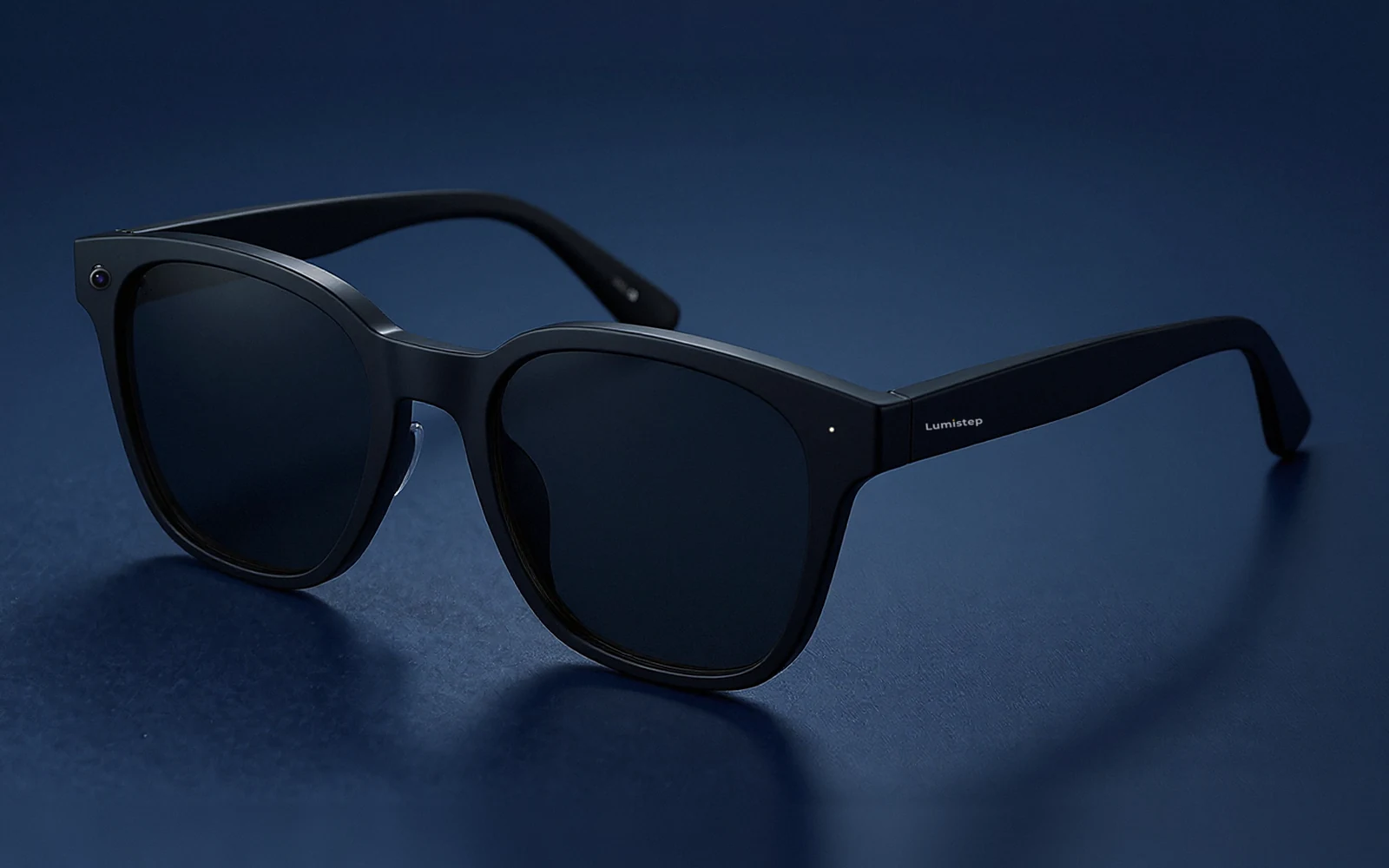
Designer frames, Classic and Classic Clear
Lumistep Glasses
A tiny camera hidden in the top outer corner of the frame front, a pinhole privacy light on the other corner, and slim temples with hidden open-ear speakers. Nobody should look twice.
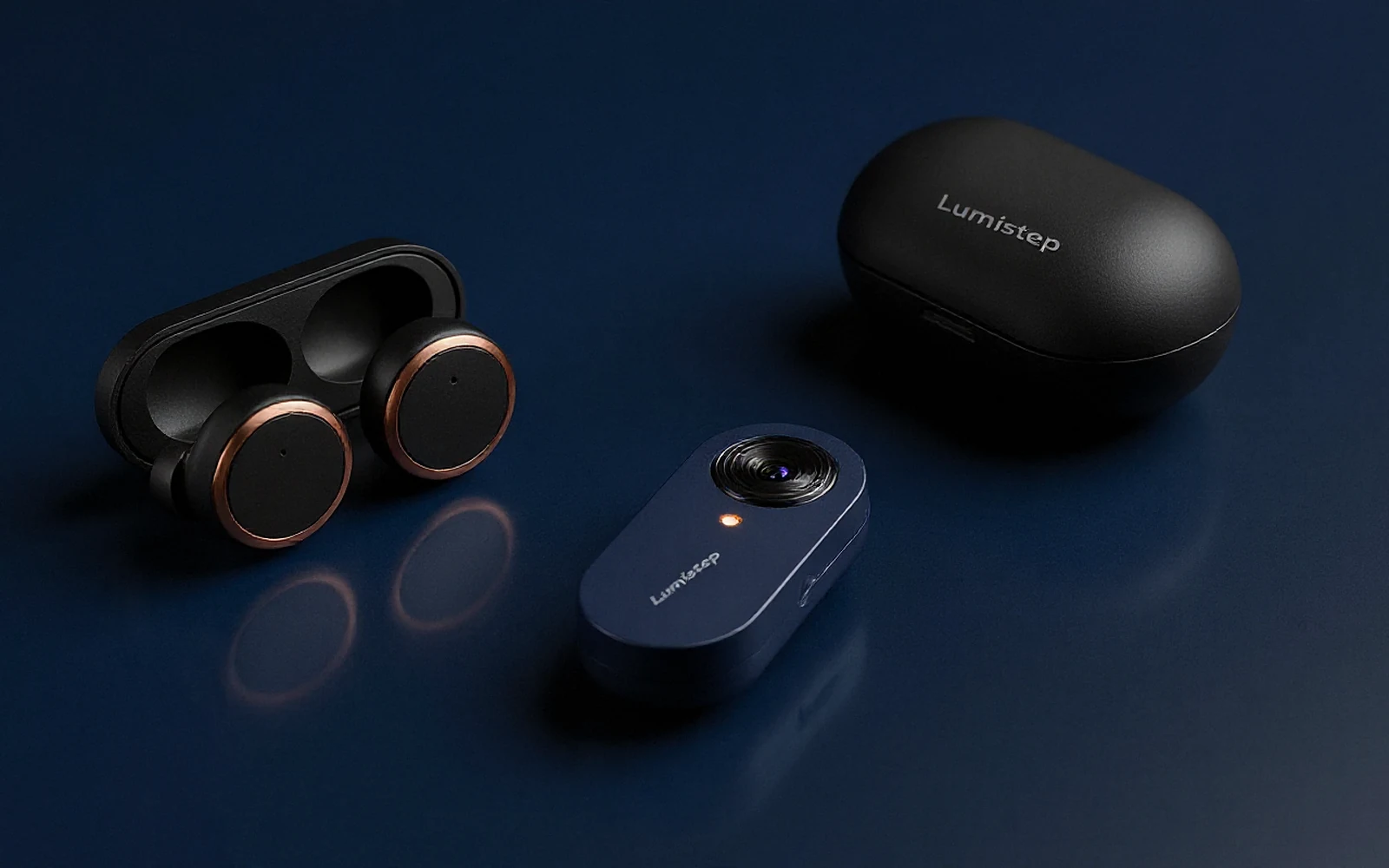
The same eyes, in a coin
Lumistep Buds and clip
Two small earbuds for Lumi's voice and calls, and a coin-sized clip that runs the same Lumi Vision software, with its own privacy light.
Concept products. Privacy is a separate promise, covered on the Lumi OS and privacy page.
What Lumi is planned to do
A voice you can ask, on your glasses or buds.
Ten things Lumi is being designed to do, each labelled honestly: what works offline, and what needs internet. None is available yet; each is tested in our 2027 trials. Lumi never decides when to cross a road.
- Ask LumiNeeds internet“Hey Lumi, what’s in front of me?”, “What does this menu say?”, “Is this the 42 bus?”, with follow-up questions, in a natural voice.
- ReadWorks offlineQuick read for signs, labels and screens. Read a page for letters and booklets, in order, with the ability to jump back.
- DescribeOffline, richer onlineA short description of the scene on the device; a richer one when you are online and ask for it.
- FindWorks offline“Find my keys”, “the door”, “an empty seat”: spoken direction, plus a buzz from the cane towards it.
- Known facesOn the device, opt-inOff by default. Tells you when someone you have taught it is nearby. Stored only on the device.
- Money, colour and lightWorks offlineBank notes, clothing colours and whether a light is on.
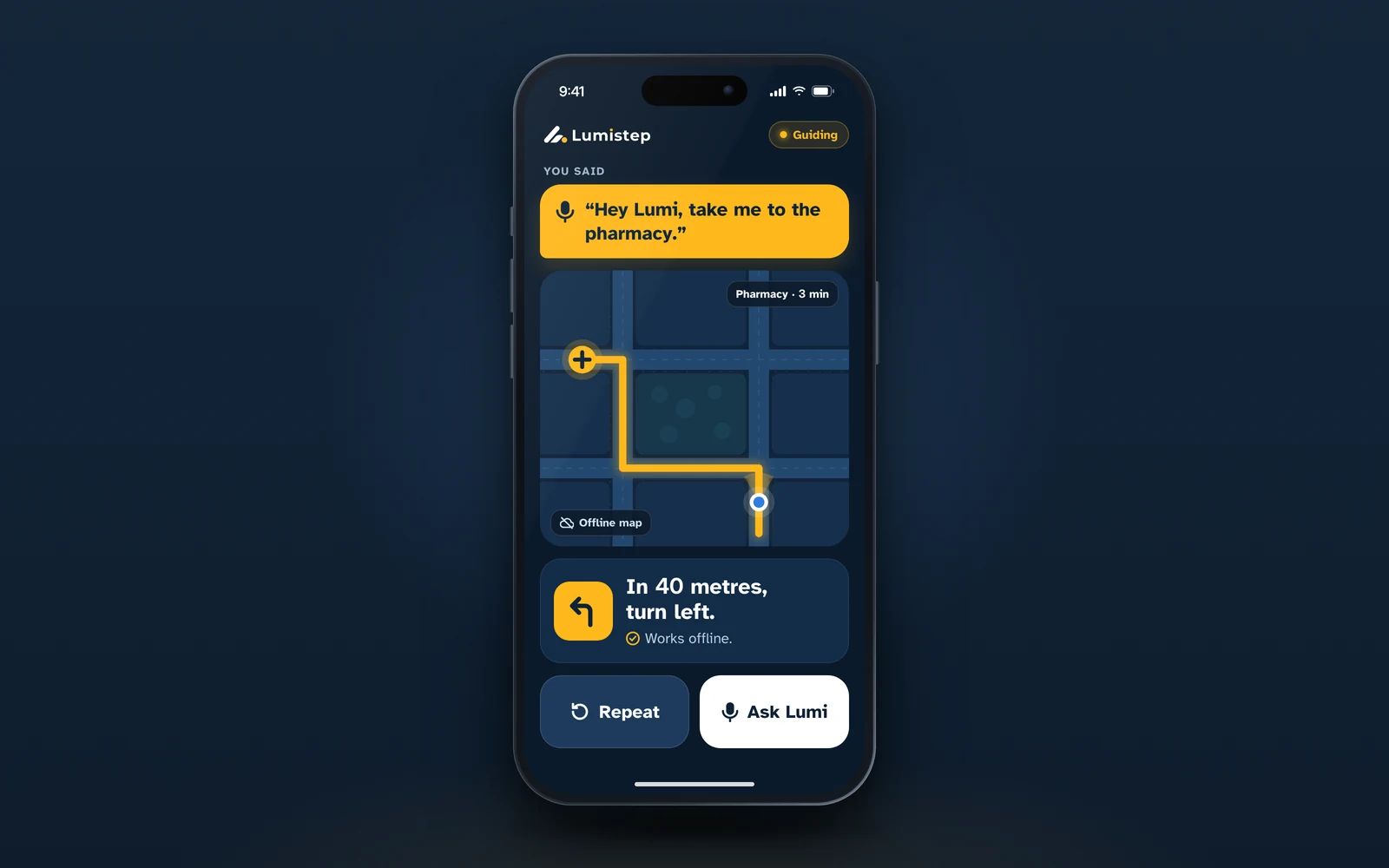
- Walk with LumiWorks offlineTurn-by-turn guidance, with the cane’s left and right buzz telling you which way.
- Call a helperNeeds internetA family member or volunteer sees through the camera, live, when you ask them to.
- EverydayVia your phoneTime, battery, messages, calendar and weather (weather needs internet).
- MemoryOn the deviceLumi remembers your places, routines and preferences. Say “forget that” and it does.
Honest limits
Where event sensing is still young.
Honest limits of event sensing
- Still scenes send little. If you and everything around you are still, the sensor registers very little. Head and body movement usually help, but not always.[42]
- Reading from events is research-stage. A 2025 study read text from an event camera, using the wearer's eye gaze and AI to rebuild images.[30][43] Our glasses have no eye tracking, so we must test our own method.
- Faint print may not register. Each pixel needs a clear change in brightness, so low-contrast labels and notes are harder. Tests with real signs, labels and money will decide.
Our plan for reading
Event sensor first. The event sensor is the main camera in the glasses and the clip, for movement, approach alerts and describing what is around you.
Test reading from events. A small deliberate movement, AI reconstruction and on-phone reading, tested with blind testers on real signs, labels and notes.
A small reading camera, only in Read mode. If the event sensor is not good enough for reading or money, a low-detail greyscale camera switches on only in Read mode, with the privacy light on, and discards the picture after reading unless you save it.
Technology
More on how Lumistep works.
Each part of the system has its own page, with sources and honest limits. Or start from the technology overview.
Sensing
Radar, laser and a vibration language
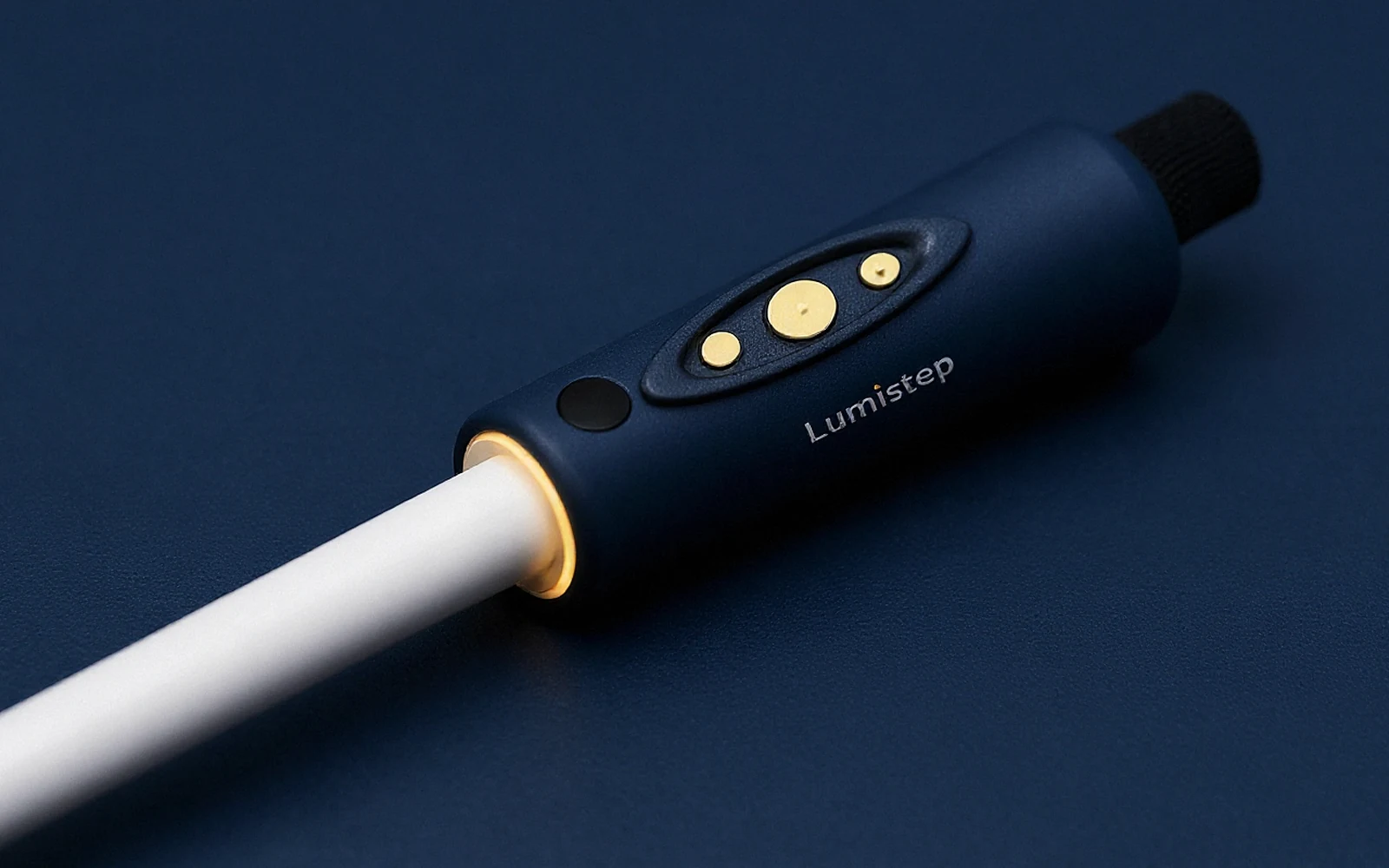
How the smart handle feels the path ahead, from head height down to the kerb, and tells your hand which side.
Lumi OS
Our own software, and your privacy
The firmware inside every device: deliberate controls, quiet alerts, updates over the air and nothing stored by default.
Offline
Maps, on-device AI and battery
What works with no signal at all, how the phone does the heavy thinking, and how long each device lasts.
Safety
Certification, testing and honest limits
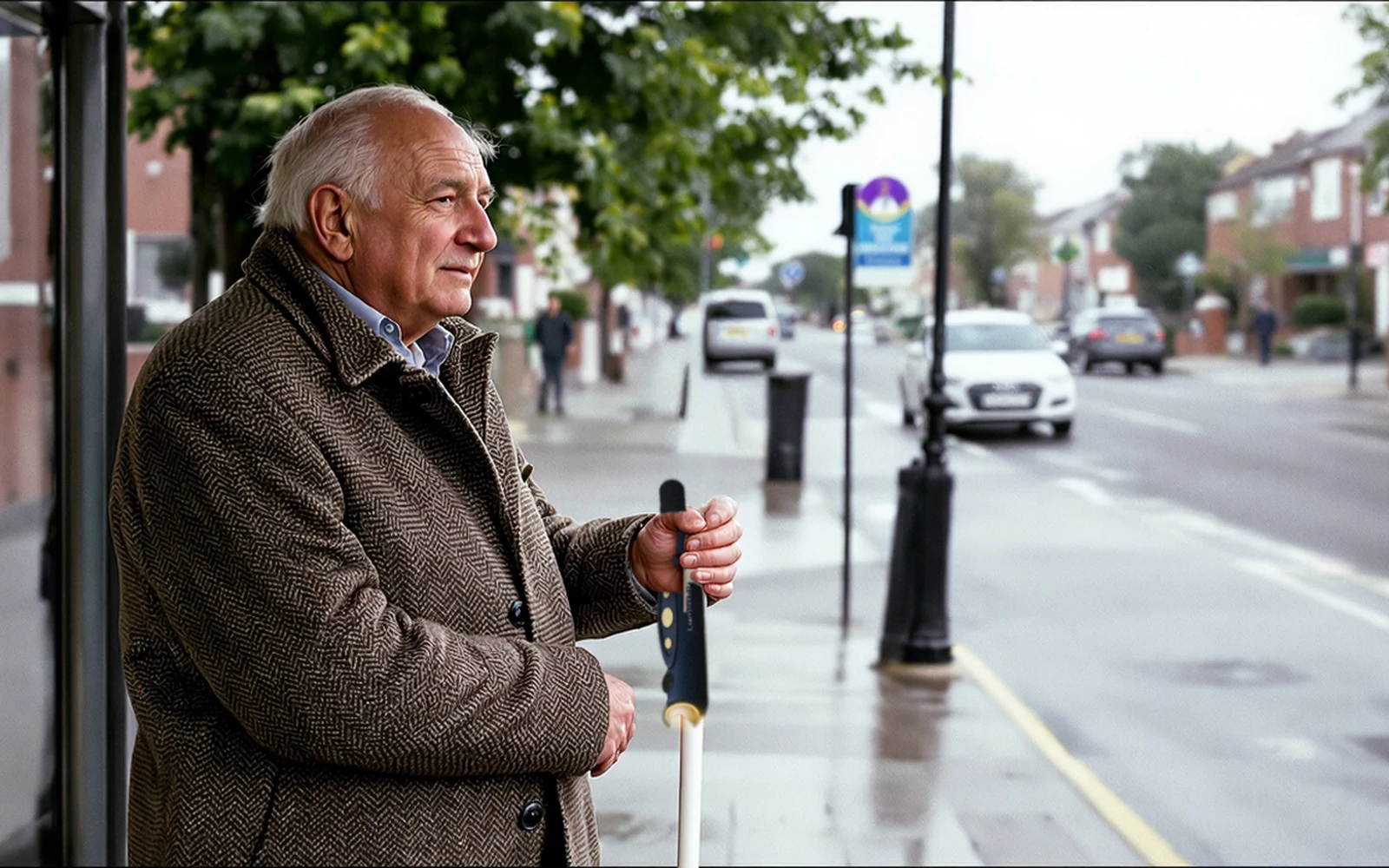
The tests before anything is sold, how we trial with blind people, what the research says and what Lumistep will never claim.
Lumistep
Get involved
Three ways to help blind and low-vision people walk, read and travel on their own.
For people and families
Join the waitlist
Hear first about field trials and the first production kits, and help shape what we build.
Join the waitlistFor charities, trainers and sponsors
Support Lumistep
Sponsor a kit, host a field trial or partner with us to reach the people who need it most.
Ways to supportFor investors
Invest in Lumistep
We are raising our first round to complete engineering and field trials. Let's talk.
For investors